






What's Happening?
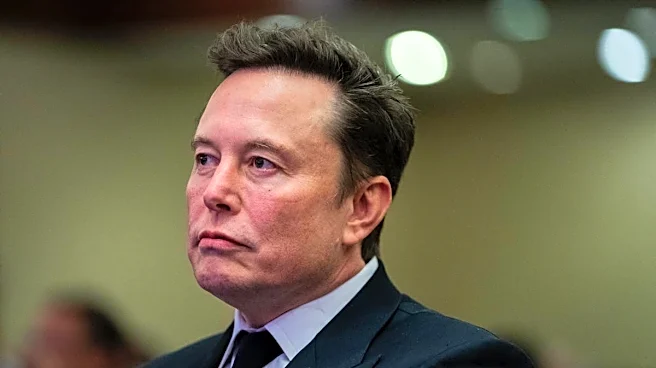
Elon Musk has publicly stated that Delta Air Lines CEO Ed Bastian will 'lose his job' following unverified comments attributed to Bastian regarding Delta's decision not to partner with Starlink, SpaceX's satellite internet service. The alleged comments,
shared by aviation account JonNYC, suggest Bastian said, 'We do not want to be with Elon Musk. Trust me.' JonNYC noted that these comments were secondhand and their accuracy could not be confirmed. Delta has not issued a statement confirming or denying the remarks. This escalation follows Delta's earlier decision to select Amazon's Project Kuiper for in-flight Wi-Fi on 500 aircraft, with installations planned for 2028. Bastian previously told Bloomberg that Amazon offered a more comprehensive package and a significantly lower price point compared to Starlink. Competitors like American Airlines and United have already begun integrating Starlink into their fleets.
Why It's Important?
This public dispute highlights the intense competition within the in-flight connectivity market and the broader implications for airline partnerships with technology providers. Delta's choice of Amazon over Starlink, and the subsequent public exchange, could influence future decisions by other airlines regarding their in-flight internet services. The perceived personal animosity between two prominent business leaders, Musk and Bastian, adds a unique dimension to a significant business decision. For Delta, the choice of Amazon's Project Kuiper could offer a competitive advantage through potentially lower costs and a broader service offering, as suggested by Bastian. Conversely, Musk's public criticism and prediction of Bastian's job loss could create reputational challenges for Delta, especially if the unverified comments gain wider traction. The situation also underscores the growing importance of reliable and affordable in-flight Wi-Fi as a passenger amenity, influencing airline competitiveness and customer satisfaction.
What's Next?
The immediate next steps will likely involve monitoring Delta's official response, if any, to Musk's comments and the unverified remarks attributed to Bastian. It remains to be seen whether Delta will confirm or deny the alleged statements, or if the airline will issue a broader statement regarding its partnership strategy for in-flight connectivity. The implementation of Amazon's Project Kuiper on Delta's fleet, scheduled to begin in 2028, will be a key development to watch, as its performance and cost-effectiveness will ultimately validate or challenge Delta's decision. Meanwhile, Starlink's continued expansion with other airlines, such as American Airlines and United, will further intensify the competition in the in-flight Wi-Fi market. The ongoing public discourse between Musk and Bastian could also influence investor sentiment and public perception of both Delta and Starlink.
Beyond the Headlines
This feud extends beyond a simple business decision, touching upon the personal dynamics and public personas of influential CEOs in the modern corporate landscape. The unverified nature of the initial comments, and Musk's swift and strong reaction, highlight the challenges of information dissemination and reputation management in the age of social media. The incident also raises questions about the appropriate boundaries of public discourse between corporate leaders, especially when personal opinions are intertwined with significant business strategies. Furthermore, the competition between Starlink and Amazon's Project Kuiper represents a broader battle for dominance in the satellite internet sector, with significant implications for global connectivity, not just in aviation. The outcome of these airline partnerships could shape the future of in-flight entertainment and productivity, impacting millions of travelers annually.