




What's Happening?
U.S. retail sales increased by 0.8% in September, following a revised 1.3% gain in August, according to the Commerce Department. This increase surpassed economists' expectations of a 0.3% rise. However, a significant portion of this spending was directed
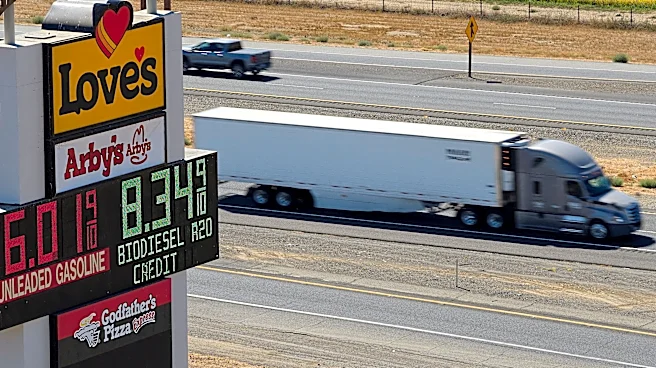
towards higher gas prices. Business at gas stations alone saw a 6.4% increase. Excluding gas stations, retail sales rose by a more modest 0.2%. The data, which is not adjusted for inflation, reflects an acceleration in overall costs, with the consumer price index rising 3.7% in September compared to a year ago, up from 3.4% in August. On a monthly basis, costs jumped 0.6% from August to September, the biggest gain in five months. While consumers are still spending, analysts note that much of this reflects higher prices rather than increased purchasing volume, and many shoppers are relying on savings and promotions to manage their budgets.
Why It's Important?
The September retail sales report highlights a critical dynamic in the U.S. economy: while headline spending figures appear strong, a substantial portion is being absorbed by essential, higher-priced goods like gasoline. This indicates that consumers are 'gritting their teeth' and spending, but their purchasing power is being eroded by inflation. The reliance on savings and promotions suggests that this level of spending may not be sustainable in the long term, especially if wages do not keep pace with rising costs. The report also underscores the pervasive impact of energy prices on the broader economy, as increased gas costs directly affect household budgets and indirectly influence the prices of other goods and services. This situation could lead to a slowdown in consumer spending as the key holiday shopping season approaches, potentially impacting retail sector performance and overall economic growth.
What's Next?
Economists anticipate that consumer spending may lose momentum as the drag from higher prices continues to weigh on households, particularly heading into the holiday shopping season. Retailers will need to adapt by protecting profit margins and maintaining flexible inventory levels. The Federal Reserve's potential response to persistent inflation, including further interest rate hikes, could also influence consumer borrowing and spending behavior. The trajectory of gas prices will remain a crucial factor in determining future retail sales trends. If inflation continues to outpace wage growth, consumers may become more cautious with their discretionary spending, leading to a shift in retail priorities and potentially impacting various segments of the consumer market. The upcoming economic reports on consumer confidence and spending will provide further insights into these evolving trends.
Beyond the Headlines
The retail sales data, when viewed through the lens of inflation, reveals a nuanced picture of consumer resilience amidst economic pressures. It suggests that while Americans are maintaining their spending habits, they are doing so out of necessity for essential goods, rather than a reflection of robust economic confidence. This could lead to a re-evaluation of consumer priorities, with a greater focus on value and essential purchases. The report also implicitly raises questions about the long-term sustainability of current economic growth if it is primarily driven by price increases rather than genuine demand. Furthermore, the impact of rising costs on different income brackets could exacerbate economic inequalities, as lower-income households are disproportionately affected by increases in essential expenses like gas and food. This situation could prompt broader discussions about economic policies aimed at supporting consumer purchasing power and mitigating inflationary pressures.