




What's Happening?
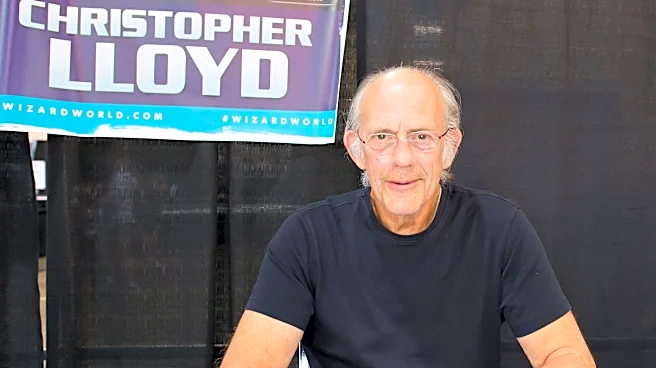
Christopher Lloyd, widely recognized for his role as Doc Brown in the 'Back to the Future' trilogy, has recently shared details about his affluent upbringing. In an interview with The Wall Street Journal, coinciding with his 88th birthday and the release
of his memoirs, 'In My Own Time,' Lloyd revealed that his family's wealth stemmed from his maternal grandfather, Lewis Henry Lapham, a co-founder of Texaco oil company in 1902. Despite being born in 1938 during the Great Depression, Lloyd's childhood was marked by luxury, including living in a 161-hectare estate named Waveny in New Canaan, Connecticut. This property, designed by descendants of Central Park's landscapers, served as a hub for cultural elite gatherings hosted by his mother, which Lloyd credits with fostering his early fascination with the arts. This privileged environment significantly shaped his early life and interests.
Why It's Important?
This revelation offers a unique insight into the background of a prominent American actor, highlighting how early life experiences, particularly those rooted in significant family wealth and cultural exposure, can influence an individual's career path and artistic inclinations. The connection to Texaco, a major American oil company, underscores the historical impact of industrial fortunes on American society and the lives of prominent families. For fans and biographers, understanding Lloyd's origins adds a new dimension to his public persona, moving beyond his iconic roles to reveal the foundational elements of his personal history. It also subtly touches upon the broader narrative of inherited wealth in the U.S. and its role in shaping cultural figures.
What's Next?
With the release of his memoirs, 'In My Own Time,' Christopher Lloyd is likely to continue sharing more personal anecdotes and reflections on his life and career. The public's interest in his privileged upbringing and its influence on his artistic journey may lead to further discussions and interviews exploring these themes. The donation of his family's estate, Waveny, to the municipality of New Canaan, transforming it into a public recreational space, suggests a continued legacy of his family's impact on the community. Future engagements might see Lloyd participating in events related to the estate or discussing the intersection of his family history with his professional life, offering deeper insights into his motivations and perspectives.
Beyond the Headlines
The story of Christopher Lloyd's upbringing extends beyond mere biographical details, touching upon themes of legacy, philanthropy, and the evolution of American wealth. His family's decision to donate the Waveny estate for public use reflects a philanthropic trend among affluent families to convert private wealth into public good, creating lasting community resources. This act transforms a symbol of private luxury into a shared space, offering a tangible connection between historical wealth and contemporary public benefit. Furthermore, Lloyd's narrative subtly highlights the enduring influence of early exposure to arts and culture, facilitated by his mother's gatherings, on shaping an individual's creative path, suggesting a broader societal implication for arts education and access.