






What's Happening?
Tabata is a widely adopted workout format characterized by 20 seconds of intense exercise followed by 10 seconds of rest, repeated eight times for a total duration of four minutes. This method was developed by Dr. Izumi Tabata, a Japanese exercise scientist,
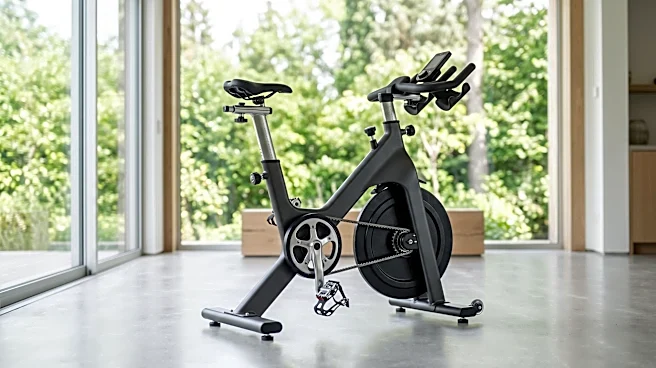
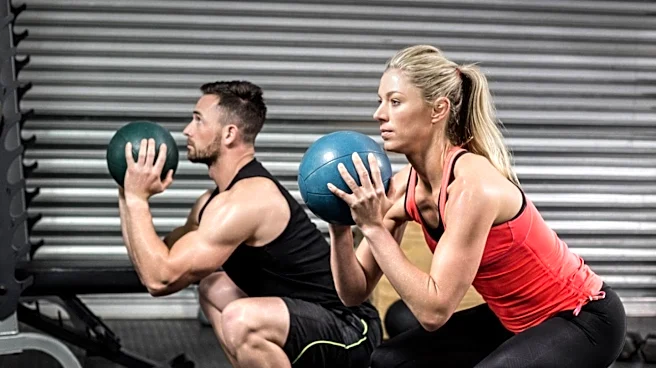
and gained prominence following a 1996 study published in 'Medicine and Science in Sports and Exercise.' The original research involved a small group of trained men performing high-intensity cycling at approximately 170% of their VO2max, significantly exceeding their maximum aerobic output. This specific protocol led to improvements in both aerobic fitness (VO2max) and anaerobic capacity. While the original lab-tested Tabata emphasized maximal effort on a single exercise, the 'gym Tabata' commonly practiced today often involves various bodyweight or equipment moves with a hard but sustainable effort, frequently incorporating multiple four-minute blocks within a single session. The core timing structure remains consistent, but the intensity and exercise selection can vary significantly from the original scientific study.
Why It's Important?
The widespread adoption of the Tabata format highlights a significant trend in fitness towards high-intensity interval training (HIIT) for its efficiency and effectiveness. For individuals and fitness enthusiasts in the U.S., Tabata offers a time-efficient workout solution, appealing to those with busy schedules who seek to maximize fitness gains in a short period. The distinction between 'lab Tabata' and 'gym Tabata' is crucial for understanding the potential benefits and risks. While the original protocol demonstrated remarkable physiological improvements, its extreme intensity may not be suitable for everyone. The adapted 'gym Tabata' makes the format more accessible to a broader population, allowing for varied exercises and sustainable effort levels. This adaptability has made Tabata a staple in many U.S. gyms and fitness apps, influencing how personal trainers and fitness instructors design their programs. However, it also underscores the importance of proper guidance and understanding of individual fitness levels to prevent injury and ensure effective training.
What's Next?
As Tabata continues to be a popular workout methodology, the fitness industry is likely to see further innovations in its application. Fitness apps and online platforms will continue to offer diverse Tabata programs, potentially incorporating more personalized adaptations based on user data and fitness goals. There may be an increased emphasis on educating participants about the difference between the original high-intensity protocol and the more generalized gym versions to manage expectations and ensure safety. For beginners or individuals with pre-existing health conditions, consulting a doctor or qualified coach before engaging in all-out intervals will remain a critical recommendation. The ongoing evolution of Tabata will likely involve integrating it with other training modalities and leveraging technology to provide more structured and guided experiences, ensuring its continued relevance in the dynamic U.S. fitness landscape.
Beyond the Headlines
The evolution of Tabata from a rigorous scientific protocol to a widely accessible gym format reflects a broader cultural shift in the U.S. towards optimizing time and maximizing results in fitness. This trend has ethical implications regarding how scientific research is translated and marketed to the general public. While the '4-minute workout' concept is appealing, the dilution of the original intensity in many commercial applications raises questions about whether participants are truly achieving the physiological benefits demonstrated in Dr. Tabata's study. This highlights the responsibility of fitness professionals to accurately represent the science behind workout methodologies. Furthermore, the popularity of Tabata underscores the psychological appeal of short, intense challenges, tapping into a desire for quick gratification and measurable progress. This phenomenon also influences the design of fitness equipment and wearable technology, which increasingly cater to tracking and optimizing high-intensity interval training sessions.