






What's Happening?
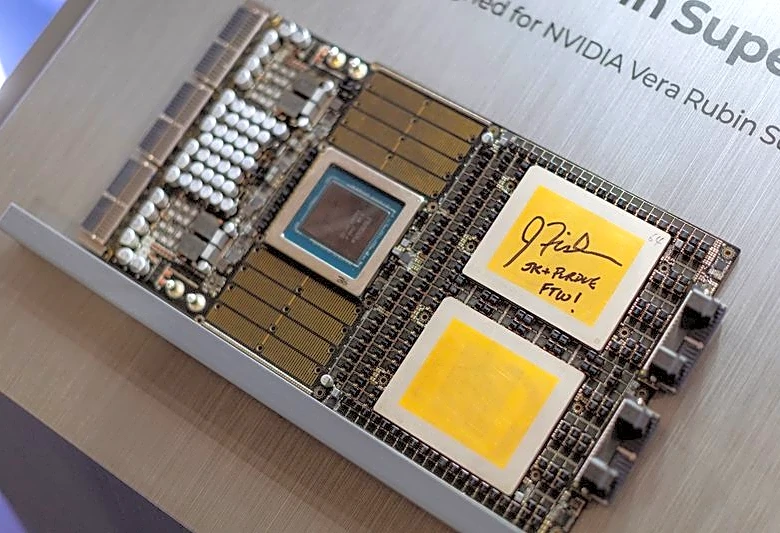
Nvidia is navigating a complex and challenging landscape in the Chinese market due to U.S. restrictions on advanced AI chip sales and directives from Beijing. Despite a strong overall financial performance, Nvidia's forward guidance excludes sales projections
for China's data center compute revenue, reflecting the ongoing geopolitical uncertainty. While Nvidia secured permission to sell some H200 chips to Chinese buyers after lobbying efforts in 2025, optimism was quickly curtailed by Beijing's directives to Chinese companies not to purchase these chips. This has resulted in Nvidia shouldering a $400 million charge related to "excess inventory" of H200 chips, as demand outside China has also fallen. The company stated that under current rules and the geopolitical landscape, it is unable to create and deliver a competitive product for wide distribution in China's data center market with approval from both the U.S. and Chinese governments. This situation has led to a significant smuggling market for Nvidia chips in China, moving products through multiple countries with falsified paperwork.
Why It's Important?
This situation is critically important for Nvidia, the U.S. technology sector, and global AI development. For Nvidia, China represents the world's second-largest economy and a crucial market for its AI chips, which are considered the industry standard. The inability to fully access this market due to U.S. export controls and Chinese government directives directly impacts Nvidia's revenue potential and market share. The $400 million charge for excess inventory highlights the financial consequences of these geopolitical tensions. For the U.S., these restrictions are part of a broader strategy to limit China's access to advanced technology, particularly in AI, due to national security concerns. However, the emergence of a large-scale smuggling market indicates the difficulty of fully controlling technology flow and could inadvertently foster a black market that undermines U.S. policy objectives. This dynamic also incentivizes China to accelerate its domestic AI chip development, potentially leading to a more self-sufficient, albeit less advanced, AI ecosystem.
What's Next?
Nvidia's immediate future in the Chinese market remains uncertain, with no China data center compute revenue included in its forward outlook. The company will likely continue to explore compliant ways to engage with the Chinese market, potentially through developing less advanced chips that meet U.S. export control thresholds. However, the effectiveness of such strategies will depend on both U.S. regulatory changes and Beijing's willingness to allow their purchase. The U.S. government is expected to continue its enforcement efforts against illicit trade, as evidenced by investigations into companies like Apex Logistics. This could lead to increased scrutiny of supply chains and more stringent compliance requirements for companies involved in technology exports. The ongoing U.S.-China technology competition will likely intensify, with both nations investing heavily in AI research and development, and potentially leading to further restrictions or retaliatory measures that impact global technology companies.
Beyond the Headlines
The challenges faced by Nvidia in China extend beyond immediate financial and regulatory concerns, touching upon the broader implications of technological nationalism and the fragmentation of the global technology landscape. The U.S. policy aims to slow China's AI advancements, but it also inadvertently creates a powerful incentive for China to achieve technological independence. This could lead to the development of parallel AI ecosystems, where different hardware and software standards emerge, potentially hindering global collaboration and innovation in AI. The situation also highlights the complex ethical dilemmas faced by multinational corporations caught between competing national interests. The long-term consequence could be a less interconnected and more bifurcated global technology market, impacting everything from research and development to product availability and pricing worldwide. The struggle for AI chip dominance is not just an economic competition but a strategic one, with profound implications for future global power dynamics.