





What's Happening?
A comprehensive guide for beginners on deadlifting stresses the importance of proper form and gradual weight progression to prevent injuries, particularly to the lower back. The guide clarifies that deadlifts are safe for beginners when performed with
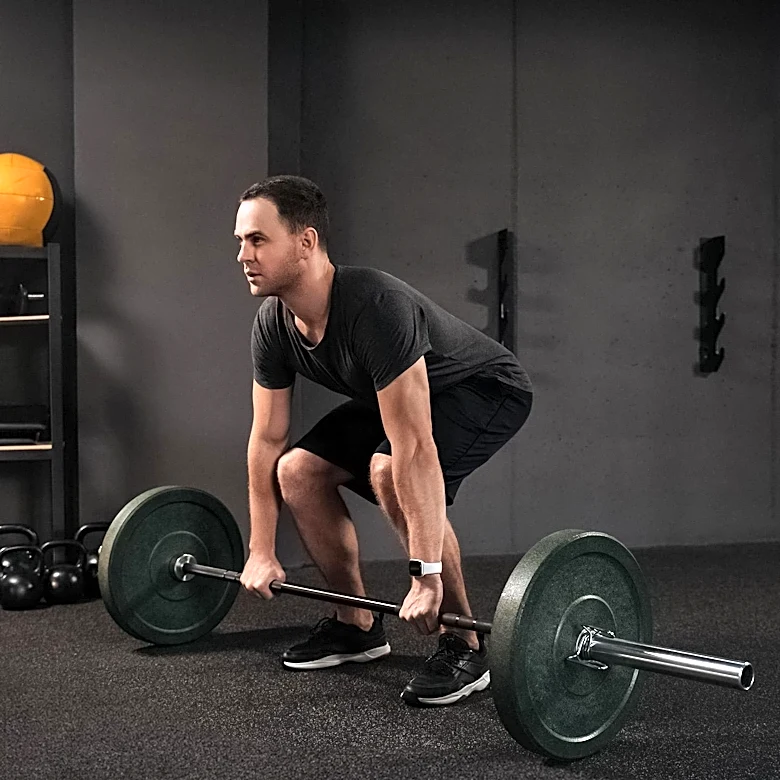
a neutral spine and sensible loading, debunking the myth that the exercise is inherently risky. It outlines a step-by-step process for setting up and executing a deadlift, including positioning the bar over the mid-foot, gripping just outside the legs, bending knees until shins touch the bar, and maintaining a flat back. Key instructions include pushing the floor away rather than pulling the bar up, keeping the bar close to the legs, and ensuring hips and shoulders rise simultaneously. The guide also advises starting with an empty barbell (45 lb or 20 kg) and only adding weight when every rep can be completed with perfect form, emphasizing that the movement pattern is more important than the weight lifted in the initial weeks.
Why It's Important?
This detailed guide is crucial for promoting safe and effective strength training practices among beginners in the U.S. fitness community. By demystifying the deadlift and providing clear, actionable instructions, it helps reduce the incidence of injuries often associated with improper technique or premature heavy lifting. The emphasis on form over weight in the initial stages can lead to better long-term adherence to exercise, as individuals are less likely to experience pain or setbacks. This approach also educates new lifters on the biomechanics of the exercise, fostering a deeper understanding of their bodies and how to train effectively. For gyms and fitness professionals, this information serves as a valuable resource for coaching and ensuring client safety, ultimately contributing to a healthier and more informed population of weightlifters across the country.
What's Next?
Beginners are advised to follow a structured progression, starting with an empty bar for 1-2 weeks to master the movement pattern, then gradually adding 5-10 lb (2.5-5 kg) when all reps are clean. Progressive overload, adding 5 lb (2.5 kg) per session, is recommended for the second month, with an estimated 1RM test in the third month to set a baseline. The guide also suggests a specific warm-up routine, including hip circles, leg swings, and bodyweight good mornings, before deadlifting. It recommends deadlifting once or twice per week to allow for adequate recovery. Future steps for beginners include exploring variations like the trap bar deadlift, dumbbell Romanian deadlift, and sumo deadlift once conventional form is consistent, typically after 3-4 weeks of sessions.
Beyond the Headlines
The detailed guidance on deadlifting extends beyond mere exercise instruction; it touches upon broader principles of physical education and injury prevention that are vital for public health. The common misconception that deadlifts are dangerous often deters individuals from engaging in a highly beneficial compound movement. By providing clear, evidence-based advice, this guide helps to counteract misinformation and encourages a more informed approach to physical activity. The focus on developing proper bracing mechanics without a belt initially, and only considering it after significant strength gains, highlights a philosophy of building intrinsic strength rather than relying on external aids prematurely. This fosters greater body awareness and resilience, which are valuable assets not just in the gym but in everyday life, contributing to a more robust and less injury-prone population.