



What's Happening?
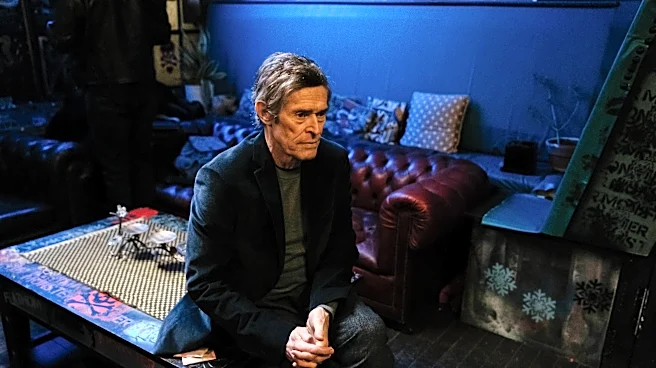
The new drama 'Late Fame,' directed by Kent Jones, delves into the life of Ed Saxberger, a once-promising poet whose early work has been largely forgotten. Played by Willem Dafoe, Saxberger is a Manhattanite in his late sixties who works at a post office,
having left his literary ambitions behind. The film explores the resurgence of interest in his work when a young admirer, Wilson Meyers, discovers Saxberger's poetry and invites him into a circle of writers and intellectuals. This unexpected attention leads Saxberger to confront his past and the realities of the modern publishing industry. The film is based on an 1895 novella by Arthur Schnitzler, which was published posthumously in 2014. The adaptation maintains the original story's themes of artistic ambition and the challenges of literary fame.
Why It's Important?
The film 'Late Fame' offers a poignant exploration of the fleeting nature of artistic success and the complexities of literary rediscovery. It highlights the challenges faced by artists who experience a resurgence of interest in their work after years of obscurity. The narrative underscores the tension between genuine admiration and the commercial motivations of the publishing industry. By portraying the struggles of an aging poet, the film raises questions about the value of art and the pressures of maintaining relevance in a rapidly changing cultural landscape. The story resonates with broader societal themes of recognition, legacy, and the pursuit of creative fulfillment, offering insights into the personal and professional dilemmas faced by artists.
Beyond the Headlines
Beyond its immediate narrative, 'Late Fame' invites viewers to reflect on the broader implications of artistic recognition and the role of cultural institutions in shaping literary legacies. The film's setting in present-day New York, juxtaposed with its roots in a 19th-century novella, highlights the timeless nature of these themes. It also prompts discussions about the authenticity of artistic communities and the impact of nostalgia on cultural production. The film's exploration of the Enthusiasm Society, a group of writers and intellectuals, serves as a microcosm for examining the dynamics of artistic collaboration and the influence of past literary movements on contemporary practices.