








What's Happening?
James Spooner, author and filmmaker, reflects on the punk aesthetic and the journey of Afropunk from a documentary to a global brand. Spooner, known for his 2003 documentary 'Afro-Punk' and co-founding the Afropunk Festival, emphasizes that punk is more
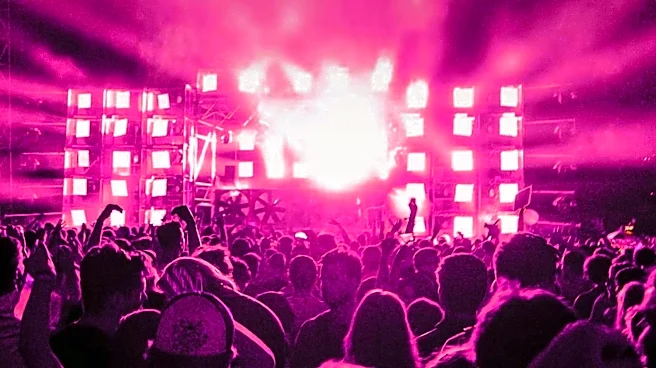
than just an aesthetic of plaid, leather, and mohawks; it's an ethos rooted in authenticity and a desire to 'keep it real.' He recounts his personal experiences as a biracial punk in a predominantly white town, where punk music provided an outlet for his anger and a sense of identity. The Afropunk Festival, which started as small events showcasing Black-fronted bands, grew significantly with corporate sponsorships. This expansion, while making the festival accessible to more people, also led to compromises in its original punk values, incorporating genres like hip-hop and R&B that Spooner felt deviated from the core ethos. He describes a pivotal moment in 2008 when he intervened on stage after a band played a song with homophobic lyrics, underscoring the tension between commercial growth and maintaining the community's values.
Why It's Important?
Spooner's narrative highlights the complex relationship between subcultures, commercialization, and identity in the U.S. music scene. The evolution of Afropunk from a grassroots movement to a major festival illustrates how corporate sponsorship can both expand reach and dilute core values. This dynamic is crucial for understanding how cultural movements, particularly those rooted in marginalized communities, navigate mainstream success. The discussion on authenticity versus commercial viability resonates across various industries, showing how brands and movements can lose their original essence when prioritizing profit or broader appeal. The emergence of independent, POC-led punk festivals in response to Afropunk's commercialization demonstrates a recurring pattern in American counter-culture: when mainstream platforms fail to represent diverse voices authentically, new, more focused communities emerge to fill that void. This continuous cycle of creation, commercialization, and re-creation is a significant aspect of cultural development in the U.S.
What's Next?
The ongoing conversation sparked by Spooner's reflections suggests a continued push for authenticity and community-driven initiatives within the punk and alternative music scenes. The rise of autonomous POC punk festivals across the U.S. and Europe indicates a growing demand for spaces that genuinely reflect the values and experiences of diverse punk communities. These new festivals, inspired by a desire to reclaim the original spirit of Afropunk, are likely to further decentralize the scene, fostering a more inclusive and representative landscape. Spooner's hope is that these emerging movements will serve as a 'gateway into something real, something political, something that can actually change the world,' suggesting a future where punk's political and social impact is prioritized over commercial interests. This trend could lead to a more fragmented but ultimately more authentic and diverse punk ecosystem.
Beyond the Headlines
Spooner's story delves into the deeper implications of identity, belonging, and representation within subcultures. His experience as a Black punk, often feeling like an 'only one,' sheds light on the pervasive nature of racial and social exclusion, even within communities that ostensibly champion rebellion and individuality. The struggle to find a safe space where his Blackness was an asset, rather than something to be minimized, speaks to broader societal challenges in achieving true inclusivity. The anecdote about the Minor Threat song 'Guilty of Being White' highlights the nuanced and often uncomfortable conversations around race and historical responsibility within punk, demonstrating how even well-intentioned artists can inadvertently perpetuate harmful narratives. Ultimately, Spooner's journey underscores the ethical imperative for cultural movements to critically examine their own internal biases and power dynamics, ensuring that their pursuit of rebellion and authenticity genuinely extends to all members of their community.