







What's Happening?
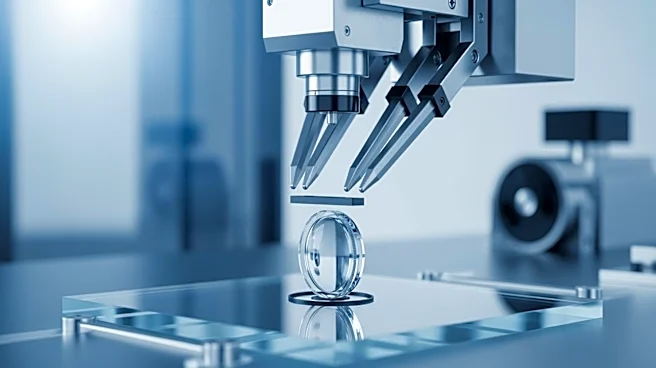
Gen Precision has launched the GTK-OSI1 Automated Passive Optical Component Inspection Machine, designed to enhance the inspection accuracy and efficiency of Fiber Array Units (FAUs) and other passive optical components. This development comes in response
to the growing demand for these components in silicon photonics and co-packaged optics (CPO) applications, driven by the expansion of AI infrastructure. The GTK-OSI1 integrates advanced technologies such as Automated Optical Inspection (AOI), AI-powered image analysis, and high-precision measurement, featuring a dual-CCD vision system for micron-level accuracy. The machine supports high-volume inspection with its Smart-Point Setup and Geo-Trajectory Algorithm, enabling manufacturers to meet the stringent dimensional tolerances required in optical communications.
Why It's Important?
The introduction of the GTK-OSI1 is significant for the optical components industry as it addresses the increasing need for precise and efficient inspection processes. As production volumes rise, manufacturers face challenges in maintaining high standards of accuracy, which are critical for ensuring manufacturing yield and product quality. The GTK-OSI1's ability to perform high-efficiency inspections supports the scalability of next-generation optical communications, such as 6.4T and 12.8T modules. This advancement not only enhances operational efficiency but also positions Gen Precision as a key player in the optical components market, offering solutions that align with the industry's evolving demands.
What's Next?
With the launch of the GTK-OSI1, Gen Precision is poised to support the growing needs of the optical communications industry. The company is expected to continue developing innovative solutions that cater to the demands of high-density measurement and inspection. As the industry progresses, Gen Precision's focus on integrating advanced technologies and maintaining high standards of quality will likely drive further adoption of their solutions, contributing to the optimization of manufacturing processes and the enhancement of product quality.