







What's Happening?
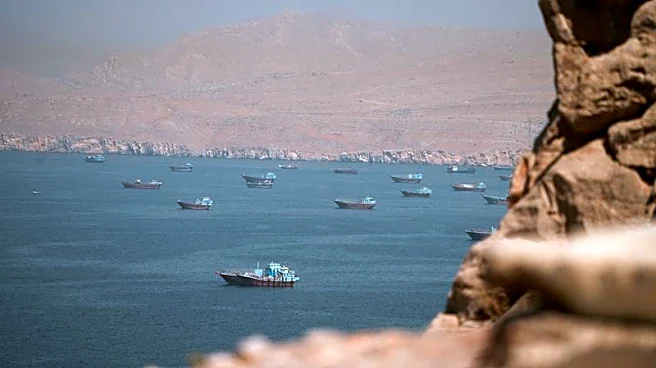
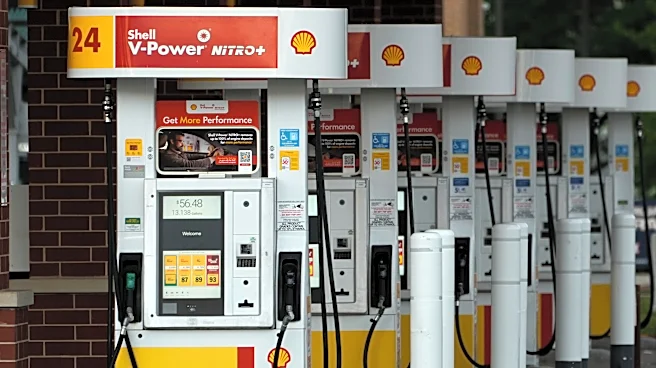
The national average price of gasoline in the United States has risen above $4 per gallon, driven by a recent surge in crude oil prices. This increase follows renewed hostilities in the Middle East, particularly involving Iranian attacks on vessels in the Strait
of Hormuz and subsequent U.S. military responses. As of July 20, the average price for a gallon of regular gasoline was $4.0030, according to AAA data. This marks a significant rise from $3.8720 per gallon the previous week. The conflict in Iran has contributed to a global hike in fuel prices, affecting the U.S. market. The Strait of Hormuz, a critical chokepoint for global oil shipments, was briefly open in late June, allowing crude to exit the Persian Gulf. However, its closure in mid-July has led to increased oil prices, which jumped by 16% last week alone. Patrick De Haan, head of petroleum analysis at GasBuddy, had predicted this rise, noting the potential for gasoline prices to reach $4 per gallon within a week.
Why It's Important?
The increase in gasoline prices has significant implications for the U.S. economy and consumers. Higher fuel costs can lead to increased transportation and production expenses, potentially driving up prices for goods and services across various sectors. This can contribute to inflationary pressures, affecting household budgets and consumer spending. The situation also underscores the vulnerability of global oil markets to geopolitical tensions, particularly in regions like the Middle East that are critical to oil supply chains. The U.S. economy, heavily reliant on oil imports, is directly impacted by such fluctuations. Additionally, the rise in fuel prices may influence public opinion and policy discussions around energy independence and the transition to alternative energy sources.
What's Next?
If tensions in the Middle East persist, further disruptions in oil supply could lead to continued volatility in gasoline prices. Stakeholders, including government officials and industry leaders, may need to consider strategic responses to mitigate the impact on the economy. This could involve exploring alternative energy policies or increasing domestic oil production. Consumers may also adjust their behavior, potentially reducing travel or seeking more fuel-efficient options. Monitoring developments in the Middle East and their impact on global oil markets will be crucial in the coming weeks.