







What's Happening?
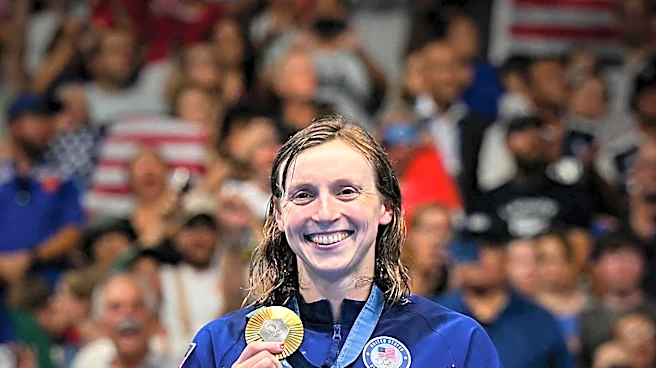
Tatjana Smith, a swimming gold medalist from the last two Olympic Games representing South Africa, has officially switched her sport nationality to the Netherlands for international competitions. Smith, who holds dual South African and Dutch citizenship,
had her change confirmed by World Aquatics. She is scheduled to represent the Netherlands at the World Short Course Championships in Beijing from December 1-6. Smith, previously known as Tatjana Schoenmaker, won a gold medal in the 200m breaststroke in Tokyo and another in the 100m breaststroke in Paris. She had ended a two-year retirement in September to return to competition at South Africa's trials for short course worlds and will continue to train in South Africa.
Why It's Important?
This decision by a prominent Olympic gold medalist to change national representation carries significant implications for both South African and Dutch swimming programs. For South Africa, it means the loss of a top-tier athlete and potential medal contender, impacting their national team's strength and Olympic prospects. For the Netherlands, it represents a significant boost to their swimming program, adding an experienced and highly successful athlete to their roster. Smith's statement about exploring her Dutch roots and seeking a different approach to high-performance training suggests that athletes may increasingly consider national affiliations based on support structures and career sustainability, rather than solely on their country of birth or initial representation. This trend could influence how national sports federations invest in and support their athletes to retain talent.
What's Next?
Tatjana Smith will make her debut representing the Netherlands at the World Short Course Championships in Beijing in early December. Her performance at this event will be closely watched as she transitions to her new national team. The move could also open doors for other athletes with dual citizenship to consider similar changes, potentially leading to a more fluid landscape in international sports representation. South Africa's swimming federation may need to assess its athlete retention strategies, while the Netherlands will aim to integrate Smith into their program effectively to maximize her potential contributions in future Olympic cycles and international competitions. Her continued training in South Africa suggests a hybrid approach to athlete development that could become more common.
Beyond the Headlines
Smith's decision highlights the complex interplay between national identity, athletic ambition, and the practicalities of professional sports. While she expressed gratitude for her time representing South Africa, her move to the Netherlands for "a different approach to high-performance training" and a "more sustainable swimming career" points to the increasing professionalization of Olympic sports. This could spark debates about the ethics of athletes switching nationalities, particularly when they have been developed by one country's system. It also underscores the global nature of elite sports, where athletes may seek the best possible environment for their careers, regardless of national borders. The case could set a precedent for how World Aquatics and other international sports federations handle such nationality changes in the future.