





What's Happening?
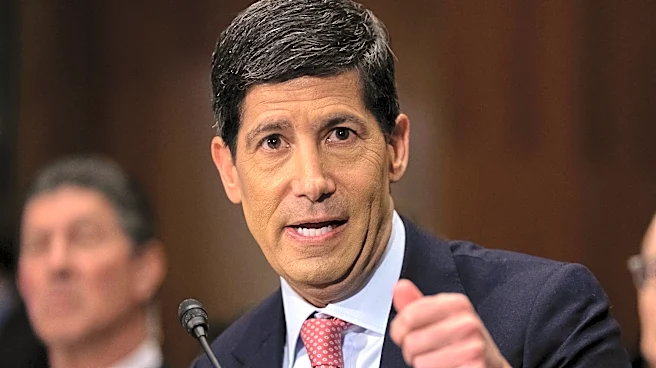
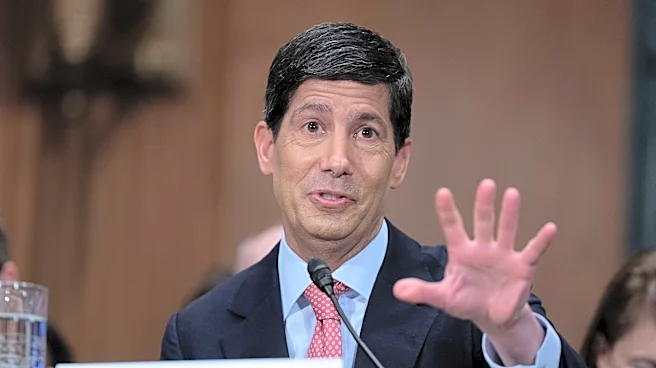
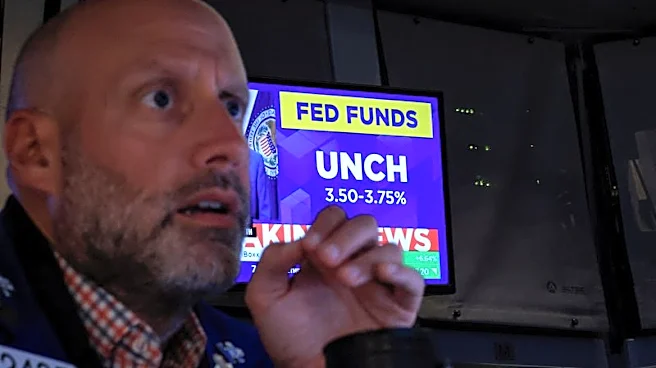
The United States Federal Reserve, led by Chair Kevin Warsh, has decided to keep the federal funds rate unchanged at a range of 3.5% to 3.75%. This decision was made during a two-day policy meeting, reflecting the Fed's ongoing commitment to its dual
mandate of price stability and economic growth. Despite President Trump's advocacy for rate cuts, the Federal Open Market Committee (FOMC) opted to maintain the current rates due to persistent inflationary pressures and geopolitical uncertainties, particularly involving Iran. Inflation has remained above the Fed's 2% target for over five years, peaking at over 9% in mid-2022 before easing slightly. The decision to hold rates steady comes amid strong economic activity, robust productivity growth, and stable job gains, although inflation remains a significant concern.
Why It's Important?
The Federal Reserve's decision to maintain interest rates highlights the ongoing challenge of balancing economic growth with inflation control. By keeping rates steady, the Fed aims to support economic expansion while addressing inflation that has consistently exceeded its target. This decision impacts various stakeholders, including businesses and consumers, as higher interest rates can slow economic growth and affect stock prices. The decision also reflects the Fed's cautious approach amid geopolitical tensions, particularly with Iran, which have contributed to volatile oil prices and inflationary pressures. The outcome of this policy decision is crucial for investors and businesses, especially those in sectors sensitive to borrowing costs, such as technology and semiconductors, which have seen increased demand due to the AI boom.
What's Next?
Looking ahead, the Federal Reserve may consider further interest rate adjustments if inflationary pressures persist. The ongoing geopolitical tensions and their impact on oil prices will likely continue to influence the Fed's policy decisions. Additionally, the Fed will monitor economic indicators, such as job growth and productivity, to assess the need for future rate changes. Stakeholders, including businesses and investors, will closely watch the Fed's actions and statements for indications of potential policy shifts. The Fed's ability to manage inflation while supporting economic growth will remain a critical focus in the coming months.