





What's Happening?
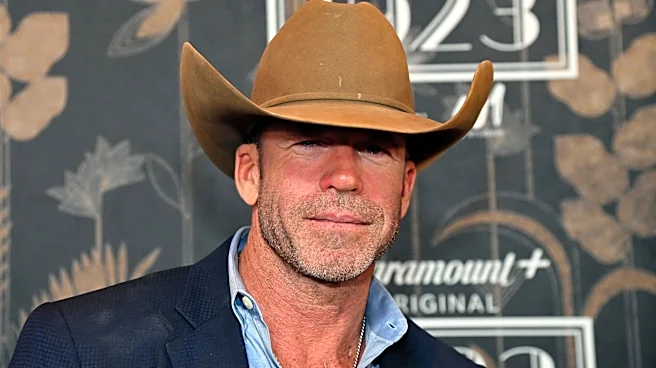
Actor Billy Bob Thornton has revealed that 'Yellowstone' creator Taylor Sheridan faced significant rejection from Hollywood early in his career. According to Thornton, "Hollywood wasn’t nice to Taylor," suggesting that his outsider status fueled his drive.
Before achieving widespread success with his Western TV series, Sheridan struggled as an actor, experiencing homelessness twice and living in his car for six months. He eventually secured a role as a cop on 'Sons of Anarchy' at age 38, but after three seasons, he transitioned to writing. His series 'Yellowstone' marked his breakthrough, allowing him to return to his home state of Texas and purchase a 600-acre Bosque Ranch, where he now produces his shows. Thornton noted that the Texas ranch community readily accepted Sheridan because of his authentic connection to the lifestyle.
Why It's Important?
This narrative highlights a significant aspect of the U.S. entertainment industry: the often-arduous path to success and the potential for talent to be overlooked by established centers like Hollywood. Sheridan's story exemplifies resilience and the power of regional authenticity in a highly centralized industry. His success with 'Yellowstone' and its spin-offs, which are deeply rooted in American Western culture and values, demonstrates a shift in audience preferences and the viability of creating successful content outside the traditional Hollywood system. This trend can empower other creators from diverse backgrounds and regions, potentially decentralizing content production and offering new perspectives that resonate with broader American audiences. It also underscores the importance of genuine connection to subject matter, as evidenced by the Texas community's acceptance of Sheridan.
What's Next?
Taylor Sheridan's continued success with his Texas-based productions, including 'Yellowstone,' 'The Madison,' and 'Lioness,' suggests a growing influence of creators who operate outside the traditional Hollywood studio system. This could lead to more production companies and networks investing in projects that are regionally specific and draw on authentic American experiences, potentially fostering new creative hubs beyond Los Angeles. The model of inviting cast members like Michelle Pfeiffer and Helen Mirren to his Bosque Ranch for meetings indicates a unique approach to filmmaking that prioritizes the creative vision and environment over conventional industry practices. This trend might encourage other creators to seek similar autonomy and control over their work, potentially reshaping how television and film are developed and produced in the U.S.
Beyond the Headlines
The deeper implications of Taylor Sheridan's journey touch upon the cultural divide between coastal entertainment hubs and the heartland of America. His initial rejection by Hollywood and subsequent embrace by Texas underscore a broader societal dynamic where authenticity and regional identity are increasingly valued. Sheridan's ability to create highly successful content that resonates with a significant portion of the American audience, particularly those in rural and Western states, suggests a demand for stories that reflect their experiences and values. This phenomenon challenges the perceived cultural hegemony of Hollywood and opens up conversations about whose stories are told and by whom. It also highlights the power of an individual's perseverance and commitment to their vision, even when facing initial industry skepticism, ultimately leading to a redefinition of what constitutes 'mainstream' success in American media.