




What's Happening?
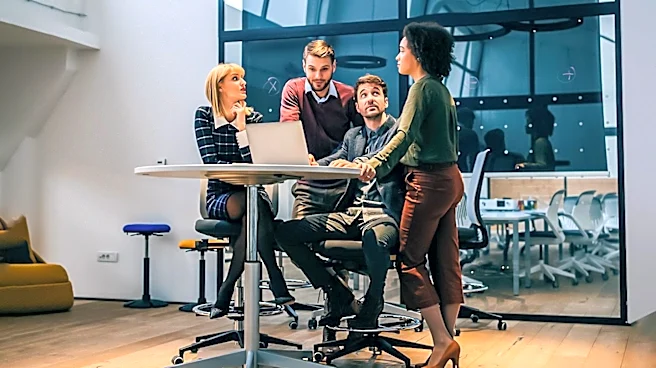
Modern meeting rooms are being reimagined beyond traditional presentations to serve multiple functions, including fostering employee well-being and team connection. Companies are making simple adjustments to these spaces, such as incorporating comfortable
seating, softer lighting, or wellness-focused digital signage, to create environments conducive to mindfulness breaks, wellness check-ins, and small team celebrations. This shift reflects a broader understanding that not all collaboration space usage needs to be strictly business-oriented. By adapting these rooms, organizations aim to provide employees with opportunities to recharge and connect, enhancing the overall workplace experience. This repurposing is part of a trend where flexible meeting rooms are designed to adapt to the evolving needs of teams and business goals, moving away from the one-dimensional view of meeting spaces.
Why It's Important?
This trend of repurposing meeting rooms for wellness and team connection is important for several reasons. It signifies a growing emphasis on employee well-being within corporate environments, recognizing that a supportive and flexible workspace can significantly impact productivity and job satisfaction. By offering spaces for mindfulness and connection, companies can help reduce stress, improve mental health, and foster a stronger sense of community among employees. This can lead to increased employee retention, reduced absenteeism, and a more positive company culture. Furthermore, it demonstrates an efficient use of existing real estate, allowing organizations to maximize the value of their physical spaces without significant additional investment. This approach also supports hybrid work models by creating versatile hubs that cater to both in-person and remote employee needs, ultimately contributing to a more resilient and adaptable workforce.
What's Next?
As companies continue to prioritize employee well-being and flexible work arrangements, the evolution of meeting room functionality is likely to expand further. We can anticipate more organizations integrating advanced wellness technologies, such as guided meditation systems or biofeedback tools, into these spaces. There may also be an increased focus on creating multi-sensory environments that promote relaxation and focus, utilizing elements like aromatherapy or soundscapes. Additionally, the role of facility managers and workplace strategists will become crucial in designing and implementing these versatile spaces effectively. The success of these initiatives will likely be measured by employee engagement, well-being metrics, and the overall impact on company culture, potentially leading to new best practices in workplace design and management.
Beyond the Headlines
The transformation of meeting rooms into wellness and connection hubs reflects a deeper cultural shift in the corporate world, moving away from a purely transactional view of work towards a more holistic understanding of employee needs. This trend challenges traditional notions of office space, suggesting that the physical environment plays a critical role not just in task execution but also in fostering emotional and social health. It highlights an ethical dimension where employers are increasingly seen as having a responsibility to support the overall well-being of their workforce. This could lead to long-term shifts in architectural design for commercial spaces, with a greater emphasis on flexible, adaptable, and human-centric environments. Ultimately, this evolution could redefine the purpose of the office, making it a place not just for work, but for personal growth, community building, and holistic well-being.