




What's Happening?
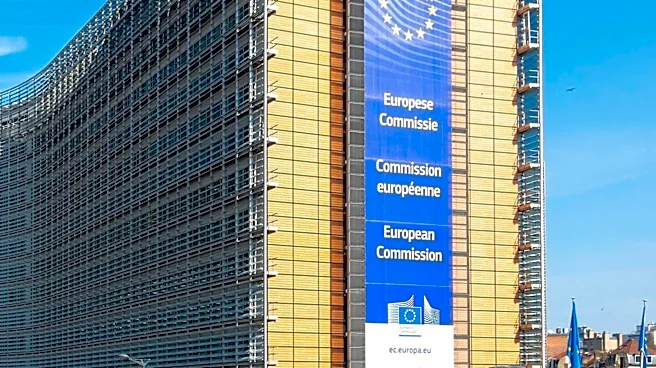
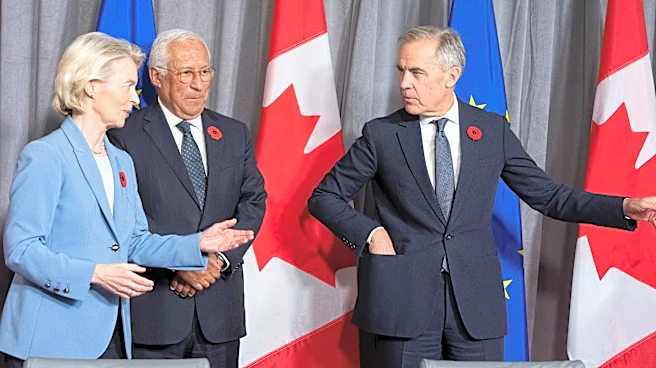
Greenland Resources Inc. has expressed support for the Canada-EU Alliance for the Future, an initiative launched in Montreal by Canadian Prime Minister Carney and European Commission President von der Leyen. A key component of this alliance is an agreement
between the European Investment Bank (EIB) and Canada, designed to facilitate EU investment in critical raw materials. Greenland Resources believes this alliance and the EIB agreement will positively impact its European market strategy. The company is developing the Malmbjerg molybdenum deposit in east-central Greenland, which is described as a world-class primary molybdenum deposit. The project has a NI 43-101 Definitive Feasibility Study and a 30-year exploitation license. It aims to supply approximately 25% of the EU's total yearly molybdenum consumption and 100% of its defense needs, with binding long-term offtake agreements already secured with major EU steel producers like Outokumpu and SSAB.
Why It's Important?
The Canada-EU Alliance for the Future, particularly the EIB agreement on critical raw materials, holds significant importance for the U.S. and global supply chains. As nations increasingly focus on securing stable supplies of critical minerals essential for advanced technologies, defense, and green energy transitions, such alliances reduce reliance on potentially volatile sources. For the U.S., this initiative could indirectly strengthen the overall Western supply chain for critical raw materials, potentially stabilizing prices and ensuring availability for industries that depend on these materials. The Malmbjerg project, with its substantial molybdenum reserves, could become a crucial non-Chinese source for the EU, aligning with broader efforts to diversify critical mineral sourcing. This strategic move by Canada and the EU could also encourage similar partnerships and investments in critical raw materials development in other allied nations, including the U.S., to bolster economic security and technological independence.
What's Next?
Greenland Resources is continuing to advance detailed engineering for its Malmbjerg project and is working closely with the European Commission and the EU steel industry to finance part of its capital expenditure. The company is also converting Memoranda of Understanding (MOUs) with steel companies in Germany, Austria, Italy, and Denmark into binding agreements. The project's economics are favorable, with the current market price of molybdenum significantly higher than the price used in its Feasibility Study. The European Commission previously identified the Malmbjerg project as a priority EU project in December 2025, indicating continued political support. Future developments will likely include further financing announcements, progress on construction, and the potential incorporation of magnesium and rare earth elements as byproducts, which could further enhance the project's strategic value.
Beyond the Headlines
The Canada-EU Alliance and the Malmbjerg project highlight the geopolitical significance of critical raw materials in the 21st century. Beyond economic considerations, securing these materials is increasingly viewed through a national security lens, as they are vital for defense industries and technological leadership. The emphasis on environmentally responsible mine design for the Malmbjerg project also reflects a growing global demand for sustainable sourcing practices, which could set new standards for the mining industry. The collaboration between Canada and the EU, facilitated by the EIB, demonstrates a concerted effort to build resilient supply chains that are less susceptible to geopolitical disruptions. This trend could lead to a re-evaluation of mining regulations and investment incentives in other Western countries, including the U.S., to foster domestic production and reduce reliance on external, potentially adversarial, suppliers.