


What's Happening?
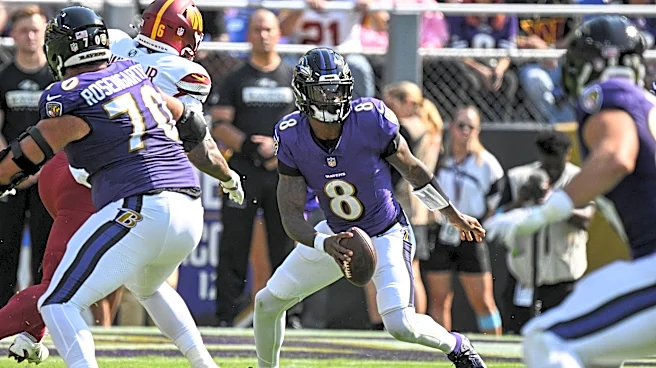
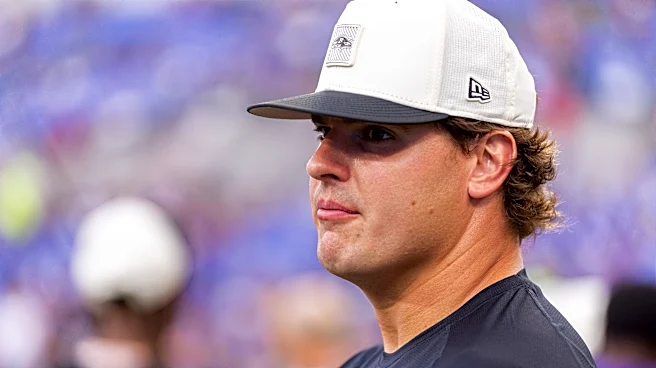
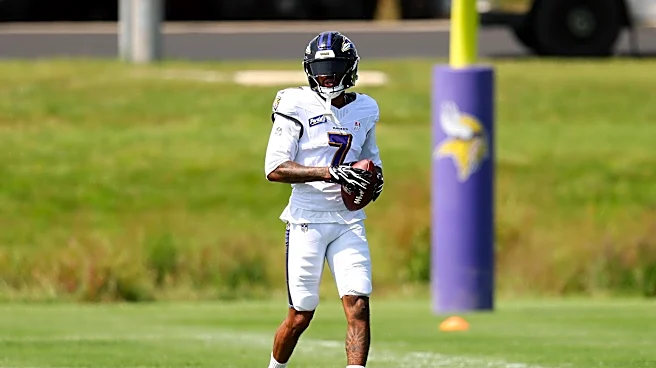
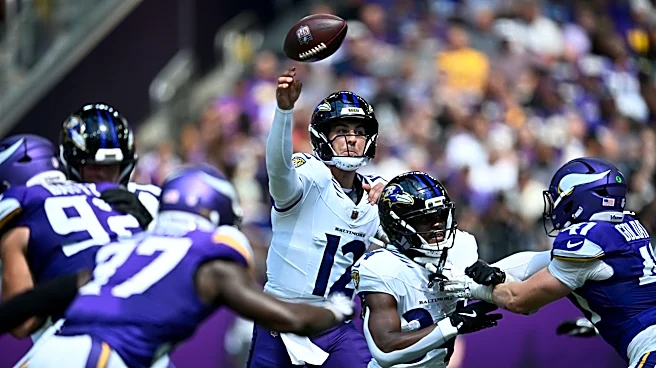
Mark Andrews, the Baltimore Ravens' prominent tight end, has expressed optimism regarding the potential for a more significant and diverse role for the team's tight ends under the new offensive coordinator, Declan Doyle. During a joint practice with the Washington
Commanders, Andrews indicated that the new system is 'very versatile' and will allow all tight ends to 'shine.' This development is particularly encouraging for the Ravens, a team that has historically leveraged the tight end position as a central component of its offensive strategy, from past players like Todd Heap and Dennis Pitta to Andrews himself. Doyle's arrival has brought a reputation for detail, creativity, and versatility, leading to discussions about how various offensive players, including wide receivers like Zay Flowers and Rashod Bateman, might be utilized in new ways. Andrews' comments align with a broader theme emerging from training camp, where Doyle has emphasized versatility and positioning players to maximize their individual strengths within a demanding offense that prioritizes understanding concepts over rote memorization.
Why It's Important?
The potential for an expanded and more versatile role for tight ends in the Baltimore Ravens' offense carries significant implications for the team's strategic approach and overall performance. By diversifying the responsibilities and opportunities for the tight end group, the Ravens aim to create more matchup problems for opposing defenses, enhancing their offensive flexibility. This shift could lead to a more unpredictable and dynamic attack, moving beyond funneling opportunities to a single player, even one as productive as Andrews. For the U.S. sports landscape, particularly within the NFL, this highlights an evolving trend in offensive scheme development, where adaptability and player-specific utilization are becoming paramount. The success of such a system could influence other teams to explore similar approaches, emphasizing the collective strength of a position group rather than relying solely on one star. This strategic evolution could also impact fantasy football, as the distribution of targets and production among multiple tight ends might alter individual player valuations and draft strategies.
What's Next?
As the NFL season approaches, the immediate next steps will involve the Baltimore Ravens continuing to integrate Declan Doyle's new offensive system during the remainder of training camp and preseason games. The team will focus on refining the roles of Mark Andrews, Durham Smythe, Matt Hibner, Josh Cuevas, and other tight ends to ensure they are prepared for the regular season. Observers will be closely watching how the versatility and expanded opportunities for the tight end group translate into actual game performance. The effectiveness of this new scheme will be tested in Week 1, providing the first real indication of its impact on the Ravens' offense. The coaching staff will likely continue to emphasize concept-based learning and player-specific strengths, aiming to create a cohesive and adaptable offensive unit. The performance of the tight ends in the initial games will be crucial in determining the long-term success and broader adoption of this offensive philosophy.
Beyond the Headlines
Beyond the immediate impact on the Baltimore Ravens' upcoming season, the emphasis on a versatile tight end group in Declan Doyle's offense reflects a deeper strategic evolution within professional football. This approach moves beyond traditional positional archetypes, recognizing that modern defenses require offenses to be less predictable and more adaptable. It highlights a shift towards maximizing the collective talent of a position group rather than solely relying on a single star player, even one of Mark Andrews' caliber. This could lead to a broader re-evaluation of how tight ends are developed and utilized across the league, potentially increasing the value of players with diverse skill sets in both blocking and receiving. Ethically, it underscores a coaching philosophy that prioritizes player development and strategic innovation, aiming to create a more resilient and dynamic team. Culturally, it could foster a more collaborative environment within the tight end room, as all players are encouraged to 'shine' and contribute in various ways, moving away from a singular focus on one dominant player.