


What's Happening?
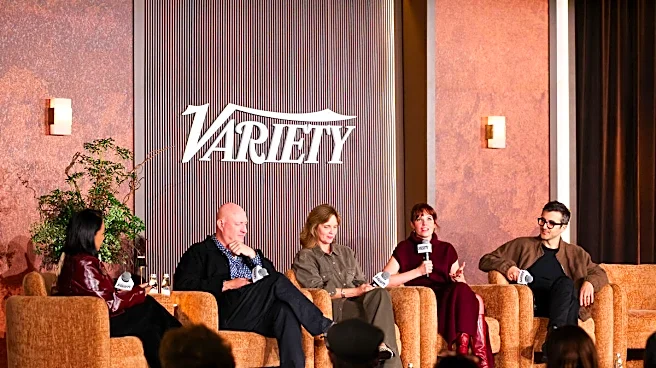
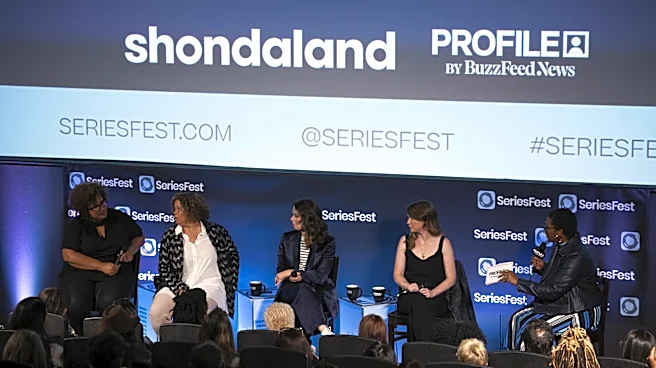
A panel of prominent limited series writers, including Nick Antosca ('Cape Fear'), Silka Luisa ('Blade Runner 2099'), and Shawn Ryan and Eileen Myers ('American Hostage'), recently convened at Variety’s 'A Night in the Writers Room.' The discussion centered
on the intricate processes involved in adapting existing narratives for television, whether they originate from true events or established franchises. Shawn Ryan and Eileen Myers detailed their approach to 'American Hostage,' a series based on a 1977 true story. They emphasized the extensive research undertaken, utilizing 911 calls, newspaper archives, and court documents, while also employing creative judgment to fill narrative gaps. Nick Antosca shared his strategy for reinterpreting 'Cape Fear,' aiming to create a fresh yet familiar experience for audiences. Silka Luisa discussed the complexities of building upon the 'Blade Runner' universe, set 50 years in the future, requiring her team to expand an established world while crafting a unique story. The panelists also highlighted the critical role of collaboration within the writers' room and with department heads to bring their visions to fruition.
Why It's Important?
This discussion underscores the evolving landscape of television content creation, where adaptations of existing intellectual property and true stories are increasingly prevalent. For the U.S. entertainment industry, the insights from these writers reveal the strategic and creative considerations behind producing compelling limited series that resonate with modern audiences. The emphasis on meticulous research for true-story adaptations like 'American Hostage' highlights the industry's commitment to factual integrity while balancing narrative demands. The challenges of reinterpreting iconic franchises such as 'Blade Runner' and 'Cape Fear' demonstrate the delicate act of honoring source material while innovating for new generations. This approach impacts viewership, streaming platform strategies, and the overall creative direction of television production, influencing how stories are told and consumed in a competitive media environment. The collaborative nature of writing rooms, as discussed, also points to best practices in fostering diverse perspectives and creative synergy within production teams.
What's Next?
The insights shared by these writers are likely to influence future approaches to limited series development within the U.S. television industry. As streaming platforms continue to seek engaging content, the strategies for adapting true stories and established franchises will remain crucial. We can anticipate a continued trend of series drawing from historical events and popular culture, with creators focusing on innovative storytelling techniques to differentiate their productions. The emphasis on strong writers' rooms and inter-departmental collaboration suggests a continued focus on holistic production processes. Future projects may further explore how to balance fidelity to source material with creative interpretation, potentially leading to new narrative structures and visual styles in adapted works. The success of these series will also inform commissioning decisions by networks and streamers, shaping the types of stories that receive greenlights in the coming years.
Beyond the Headlines
Beyond the immediate production aspects, the discussion touches upon deeper implications regarding storytelling in a media-saturated world. The writers' efforts to make historical events resonate with modern audiences, as seen with 'American Hostage,' reflect a broader cultural desire to connect with the past through contemporary lenses. Similarly, reimagining classic franchises like 'Blade Runner' speaks to the ongoing dialogue between nostalgia and innovation in popular culture. This trend raises questions about intellectual property rights, creative ownership, and the ethical responsibilities of adapting sensitive true stories. The collaborative model of the writers' room also highlights the importance of diverse voices and perspectives in shaping narratives, contributing to a more inclusive storytelling landscape. Ultimately, these creative processes influence not only what we watch but also how we interpret history, engage with fictional worlds, and understand the complexities of human experience through the medium of television.