


What's Happening?
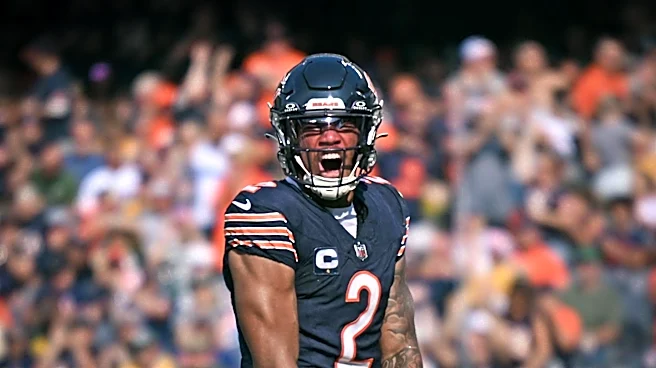
NFL quarterback Joe Flacco has publicly declared his intention to pay any fines incurred by Caleb Williams for wearing Caddix cleats, which feature a logo not approved by the league. This announcement comes after Williams was fined by the NFL for wearing the non-approved
logo. Caddix CEO Jack Rasmussen confirmed that Williams was subsequently provided with blank cleats without a logo, a decision made by Williams to avoid further distraction. Rasmussen, whose company focuses on player health and safety through its cleat technology designed to reduce rotational resistance and traction, stated that Caddix cleats are approved by the NFL's health and safety department. However, the issue lies with the business side of the NFL, which requires a premium payment for logo approval, a cost Caddix, a small company with four employees, cannot currently afford.
Why It's Important?
This situation highlights a significant tension between player safety and the commercial interests of the NFL. While the league's health and safety department has approved Caddix cleats for their protective qualities, the business department's refusal to approve the logo without a substantial fee creates a dilemma. This could potentially force players to choose between wearing equipment they believe is safer and avoiding fines or adhering strictly to commercial regulations. Joe Flacco's public support and offer to cover fines underscore a growing player advocacy for health-conscious equipment, even if it conflicts with league branding policies. This incident could prompt further discussion within the NFL regarding its policies on approved gear, especially when player well-being is a central concern. It also brings attention to smaller companies like Caddix, which are innovating in sports safety but face barriers due to financial constraints in navigating league regulations.
What's Next?
The immediate next step involves Caleb Williams continuing to wear blank Caddix cleats to avoid further fines, as confirmed by Caddix CEO Jack Rasmussen. The long-term implications could see continued pressure on the NFL to reconcile its health and safety objectives with its commercial branding policies. This situation might encourage other players to voice their opinions on equipment choices and safety, potentially leading to a review of the league's approval processes for gear. For Caddix, while they cannot currently afford the NFL's logo approval fee, the publicity generated by this controversy and the endorsement from players like Williams and Flacco could significantly boost their brand recognition and market presence, potentially enabling them to meet the NFL's commercial requirements in the future.
Beyond the Headlines
The controversy surrounding Caleb Williams' cleats and Joe Flacco's intervention touches upon broader ethical and economic considerations within professional sports. It raises questions about the balance of power between a major sports league and individual players or smaller innovative companies. The NFL's stance, prioritizing commercial agreements over potentially safer, yet unapproved, equipment, could be seen as a conflict of interest. This incident also highlights the influence of player endorsements and the potential for athletes to drive change within their respective leagues. The story of Caddix, a company founded on a dream to improve player safety, struggling against the financial demands of a multi-billion dollar industry, exemplifies the challenges faced by innovators in highly commercialized environments. This could spark a wider debate on how sports leagues can better integrate player welfare with their business models.