








What's Happening?
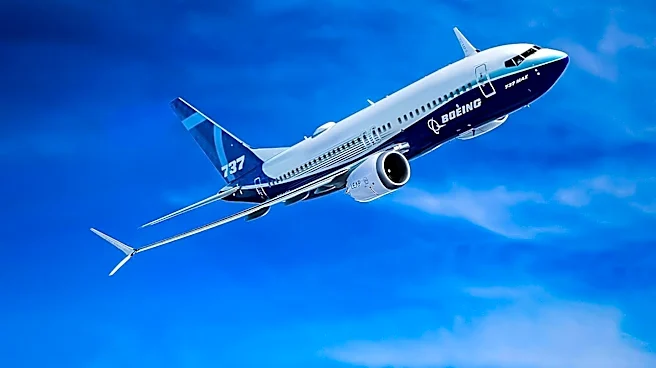
Lufthansa Group has announced its decision to exercise options for 20 Boeing 737 MAX 10 aircraft. This move is part of the airline group's ongoing fleet modernization program and follows a 2023 order for 40 Boeing 737 MAX 8 aircraft, which included a total
of 60 purchase options for additional aircraft from the Boeing 737 MAX family. Deliveries for these newly ordered Boeing 737 MAX 10 aircraft are anticipated to commence in the early 2030s. The Boeing 737 MAX 10 is the largest variant within the 737 MAX family, offering increased seating capacity compared to the 737 MAX 8 already on order. The Supervisory Board of Deutsche Lufthansa AG approved the exercise of these options, which have an approximate list value of USD 3.4 billion. The new aircraft are intended to gradually replace older Airbus A320 family aircraft across the Lufthansa Group's fleet.
Why It's Important?
This order signifies a strategic investment by Lufthansa Group in enhancing its long-term capacity planning and operational efficiency. The introduction of the Boeing 737 MAX 10 is expected to yield significant benefits, including a reduction in fuel consumption by approximately 30 percent compared to the older aircraft it will replace. Furthermore, its higher seating capacity is projected to lower unit costs by about 20 percent. These efficiencies are crucial for airlines operating in a competitive market, contributing to improved profitability and sustainability. The modernization effort also aims to reduce CO2 emissions, aligning with growing environmental concerns and regulatory pressures within the aviation industry. For Boeing, this order reinforces confidence in the 737 MAX program, particularly the MAX 10 variant, which has faced scrutiny and certification challenges.
What's Next?
The delivery of the 20 Boeing 737 MAX 10 aircraft is scheduled to begin in the early 2030s, indicating a long-term strategic plan for Lufthansa Group's fleet. As part of its broader fleet modernization program, the airline group anticipates taking delivery of over 250 new aircraft by 2035. This continuous investment suggests a sustained effort to maintain an efficient and sustainable fleet. The exercise of these options by a major airline like Lufthansa could also serve as a bellwether for other carriers, potentially leading to similar orders for the 737 MAX 10 as airlines seek to optimize their fleets for fuel efficiency and capacity. The successful integration of these new aircraft will be a key focus for Lufthansa, as will the ongoing certification process for the 737 MAX 10.
Beyond the Headlines
The decision by Lufthansa to invest in the Boeing 737 MAX 10 highlights a broader trend in the aviation industry towards upsizing aircraft to manage airport slot and gate limitations. As air traffic grows, airlines are increasingly looking for ways to accommodate more passengers per flight, making larger narrow-body aircraft like the MAX 10 more attractive. This strategy helps airlines maximize revenue per available slot and gate, which are often constrained at major airports. Furthermore, the emphasis on fuel efficiency and reduced unit costs reflects the industry's ongoing commitment to environmental sustainability and economic viability. The long-term nature of this order also underscores the significant capital investments and planning required in the aviation sector, with decisions made today impacting operations for decades to come.