





What's Happening?
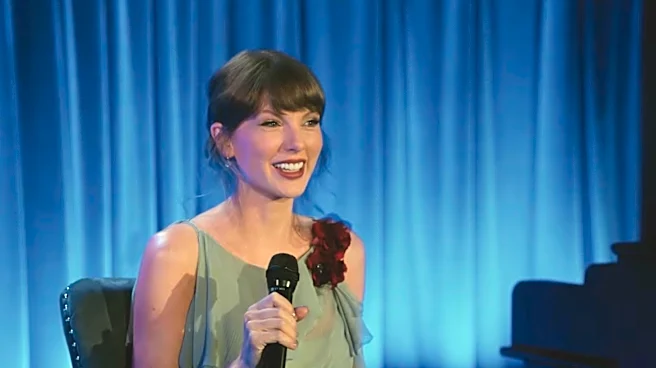
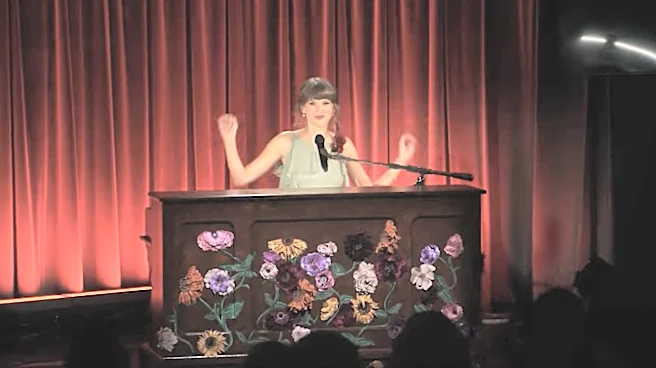
Taylor Swift, the acclaimed singer-songwriter, has revealed a growing connection and loyalty to her country music origins, despite her significant evolution into a global pop superstar. During an interview for the Recording Academy's 'The Icon Sessions'
at the GRAMMY Museum, Swift stated, "I love my country roots more and more the further along this path I get, and I want to honor them more and more. I feel more tied to them, more loyal to them." She reflected on her two-decade career, emphasizing how her early years in Nashville and her debut single 'Tim McGraw' in 2006 shaped her as an artist. Swift highlighted the creative environment of Nashville, where she developed her songwriting skills, noting that songwriting has remained a constant thread throughout her career, even as her musical style diversified into pop, folk, and alternative genres. Her reflections underscore that her changing musical direction has not diminished her attachment to the genre that first embraced her.
Why It's Important?
This statement from Taylor Swift is significant as it highlights the enduring influence of country music on one of the world's most successful artists. For the U.S. music industry, it reinforces the foundational role of genres like country in nurturing talent that can transcend boundaries. Swift's acknowledgment of her roots could inspire a new generation of artists to explore country music, potentially leading to a resurgence or renewed interest in the genre. It also demonstrates the power of an artist's narrative and authenticity; by embracing her past, Swift strengthens her connection with a broad audience, including her original country fanbase and those who appreciate her journey. This could also influence music labels and producers to invest more in artists with diverse genre backgrounds, recognizing the potential for cross-genre appeal and long-term career sustainability. Furthermore, it underscores the cultural importance of Nashville as a hub for musical development and a place where artists can hone their craft before achieving global recognition.
What's Next?
Following Taylor Swift's public affirmation of her country roots, it is plausible that she may incorporate more country-influenced elements into her future music or performances. This could manifest in collaborations with country artists, the release of songs with a distinct country sound, or even special performances that pay homage to her early work. Such moves would likely be met with enthusiasm from her diverse fanbase, potentially bridging the gap between pop and country audiences even further. Her comments could also encourage other artists who have transitioned between genres to publicly acknowledge their foundational influences, fostering a broader appreciation for musical heritage within the industry. Additionally, the Recording Academy and other music institutions might leverage Swift's statements to promote discussions on genre evolution and the importance of artistic origins, potentially leading to new initiatives or programs that support artists across different musical landscapes.
Beyond the Headlines
Beyond the immediate implications for her music, Taylor Swift's statement touches upon deeper themes of identity, artistic integrity, and the evolution of an artist. In an industry often criticized for its commercial pressures and tendency to pigeonhole artists, Swift's consistent acknowledgment of her country beginnings, even after achieving massive pop success, speaks to a profound sense of self and respect for her journey. This narrative challenges the notion that artists must completely shed their past to embrace new directions. It also highlights the cultural significance of 'roots' in American music, where genres are often deeply tied to regional identities and traditions. Swift's ability to maintain loyalty to her origins while continuously reinventing her sound offers a powerful model for artistic development, suggesting that authenticity and a connection to one's foundational influences can be a source of strength and longevity in a rapidly changing music landscape. This perspective could inspire broader conversations about artistic freedom and the value of diverse musical expressions.