






What's Happening?
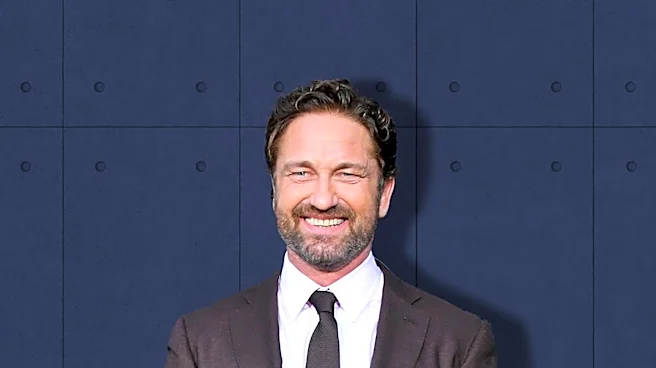
Hollywood actor Gerard Butler recently confirmed a traditional Scottish custom regarding kilts during an appearance on Drew Barrymore's show. Butler, who was born and raised in Scotland, stated that it is common practice to wear a kilt without undergarments,
particularly at Scottish weddings. When questioned by Barrymore about the veracity of this tradition, Butler humorously affirmed it, explaining that it involves 'free balling it.' He also quipped that such a practice might not be well-received in Hollywood. Butler's career spans various notable roles, including King Leonidas in '300,' Count Dracula in 'Dracula 2000,' and Secret Service agent Mike Banning in the 'Has Fallen' film series. He also lent his voice to the 'How to Train Your Dragon' franchise and appeared in films like 'The Phantom of the Opera' and 'Machine Gun Preacher.'
Why It's Important?
This revelation offers a lighthearted glimpse into cultural traditions that persist even among globally recognized figures. For many, the kilt is a symbol of Scottish heritage, and Butler's candidness sheds light on a lesser-known aspect of its traditional wear. It highlights how cultural norms, even those considered unconventional in other contexts, are maintained and celebrated within specific communities. The humorous exchange on a popular talk show also serves to demystify and normalize a cultural practice that might otherwise be subject to misunderstanding or stereotype. This kind of public discussion by a celebrity can foster greater cultural awareness and appreciation, encouraging audiences to learn more about diverse traditions beyond their immediate experiences.
What's Next?
While this particular discussion is unlikely to lead to significant policy changes or industry shifts, it may spark increased public interest in Scottish culture and traditions. Media outlets and cultural commentators might pick up on the story, leading to further discussions about traditional attire and cultural practices. For Gerard Butler, this humorous anecdote could become a recurring topic in future interviews, further solidifying his connection to his Scottish roots in the public eye. It might also encourage other celebrities to share unique cultural aspects of their backgrounds, contributing to a broader dialogue on diversity and heritage in entertainment.
Beyond the Headlines
Beyond the immediate humor, Butler's comments touch upon the broader theme of cultural identity and authenticity. In an increasingly globalized world, the preservation and open discussion of unique cultural practices, even seemingly minor ones, become significant. It underscores the idea that traditions, regardless of how they are perceived externally, hold deep meaning and historical context for those who practice them. The contrast Butler drew between Scottish tradition and Hollywood's potential disapproval also subtly highlights the pressures individuals, especially public figures, face in navigating their cultural heritage within a mainstream, often homogenizing, industry. This interaction serves as a reminder of the rich tapestry of global cultures and the importance of respecting and understanding their nuances.