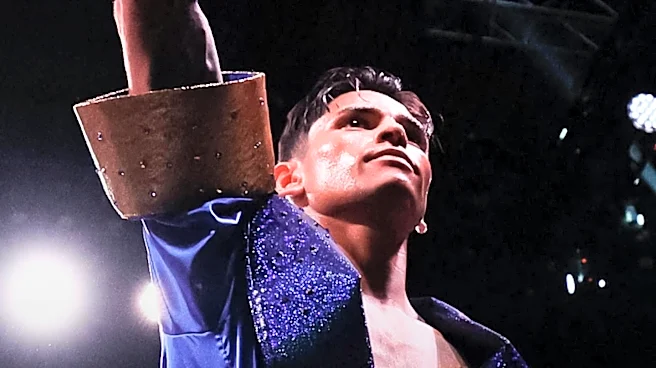

What's Happening?
Ryan Garcia has sparked a debate regarding Terence Crawford's recent retirement from boxing, questioning whether it was premature for him to be considered a legend. Crawford, who retired after defeating
Canelo Alvarez, is seen by Garcia as having missed an opportunity to solidify his legacy by not facing younger, emerging fighters. Garcia argues that true legends are defined not just by their victories but by their willingness to face uncertainty and risk. This discussion highlights the psychological aspects of greatness and the allure of facing the unknown, suggesting that Crawford's decision leaves his legacy incomplete.
Why It's Important?
The debate over Crawford's retirement underscores a broader trend in modern sports where athletes prioritize longevity and financial security over legacy. This shift could alter the landscape of boxing, where narratives of underdogs and comebacks are central to the sport's appeal. If more fighters choose to retire at their peak, avoiding the next generation of challengers, it could lead to a dilution of the sport's essence. Crawford's decision also raises questions about the criteria for achieving legend status in boxing, emphasizing the importance of facing formidable opponents and enduring challenges.
What's Next?
Crawford's retirement could set a precedent for other fighters, potentially leading to earlier retirements and a focus on financial security over legacy. This trend might prompt discussions among boxing promoters, athletes, and fans about the future of the sport and the importance of maintaining its traditional narratives. Additionally, Crawford's legacy may be revisited if he decides to return to the ring, as comebacks are not uncommon in boxing and could offer him another chance to cement his status as a legend.