






What's Happening?
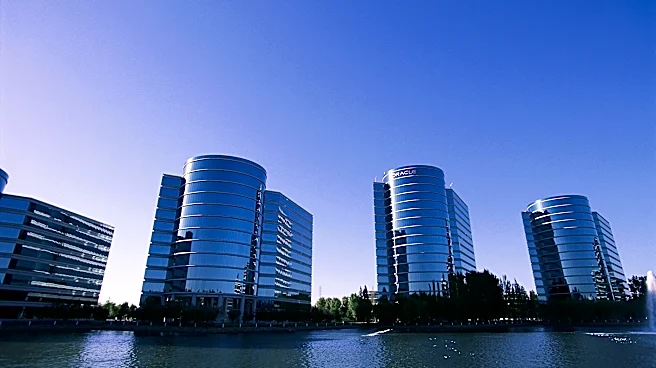
Oracle Corporation, a public company headquartered in Austin, Texas, is projecting a turnaround in fiscal 2028, despite its shares being down 42% in 2026. The company, which offers cloud applications and platform services, has been actively investing
in building AI data centers, leading to increased debt and equity issuance. For fiscal 2027, Oracle aims to raise $20 billion, split equally between debt and equity. A significant portion of its new contracts are already funded through customer prepayments or a 'bring-your-own-hardware' scheme, ensuring that its fiscal 2028 capital expenditure is fully funded. Oracle has demonstrated strong growth in its cloud infrastructure revenue, which surged by 121% year over year in the first quarter of fiscal 2027, an increase from the 93% growth observed in the preceding quarter. This acceleration in revenue conversion from its backlog is a key factor in the company's optimistic outlook.
Why It's Important?
Oracle's financial trajectory holds significant implications for the U.S. technology sector and broader market. The company's substantial investment in AI data centers reflects a growing trend within the tech industry to capitalize on artificial intelligence capabilities. The current high-interest rate environment, with the Federal Reserve increasing rates to combat inflation, has put pressure on tech stocks, including Oracle. However, Oracle's ability to secure funding through customer prepayments and its 'bring-your-own-hardware' model demonstrates innovative strategies to mitigate financial strain. A successful turnaround for Oracle could signal resilience in the AI infrastructure market and potentially encourage further investment in the sector, benefiting related industries and job markets. Conversely, continued pressure on tech stocks due to interest rate hikes could impact investor confidence and overall market stability, affecting retirement funds and investment portfolios across the U.S.
What's Next?
Oracle's fiscal 2027 concludes in May of next year, with the company on track to raise $20 billion. The company anticipates a turnaround in fiscal 2028, with expectations for its free cash flow to turn positive in the second half of that fiscal year, which begins in December 2027. Wall Street analysts are largely bullish on Oracle's prospects, with a median 12-month price target of $240, implying a significant upside. Analysts project a 7% increase in Oracle's earnings per share in fiscal 2027, followed by a more substantial 35% jump in fiscal 2028. The Federal Reserve's potential interest rate hike in December could further impact tech stocks, including Oracle, potentially creating a buying opportunity for investors. The company's ability to convert its backlog into revenue at an accelerating pace will be crucial in achieving its projected turnaround.
Beyond the Headlines
The challenges faced by Oracle, including mounting debt and cash burn, highlight the intense capital requirements for developing cutting-edge AI infrastructure. This situation raises broader questions about the sustainability of rapid expansion in the AI sector, particularly in a high-interest rate environment. The reliance on customer prepayments and 'bring-your-own-hardware' schemes by Oracle could become a model for other tech companies seeking to fund large-scale infrastructure projects without solely relying on traditional debt or equity markets. Furthermore, the market's reaction to Oracle's performance will serve as a barometer for investor appetite for AI-focused investments, influencing venture capital flows and corporate strategies across the U.S. technology landscape. The ethical implications of AI development and data center energy consumption also remain long-term considerations for the industry.