

What's Happening?
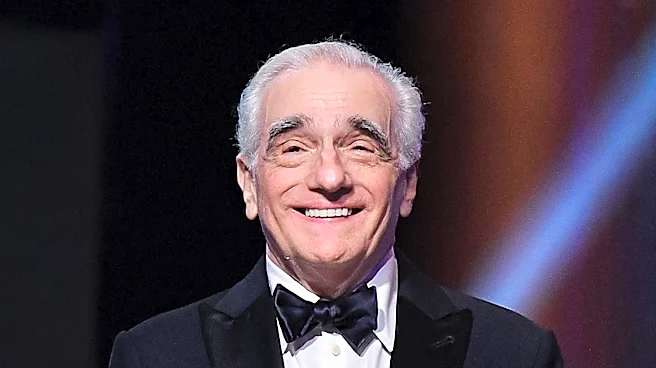
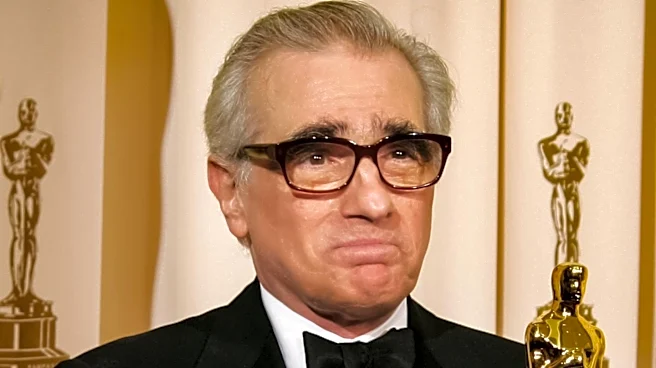
Renowned director Martin Scorsese is embracing artificial intelligence to innovate the filmmaking process, particularly in visual storytelling. He has joined Black Forest Labs as an advisor to explore how AI can assist in translating a director's vision
into tangible visual concepts for a production team. Scorsese participated in a demonstration with Black Forest Labs' FLUX image-generation model, where he used the technology to create visual concepts for a scene. This AI tool can transform textual descriptions into images that effectively convey framing, locations, and atmosphere, aiding in pre-production. Scorsese, who has a long history of creating his own storyboards, sees this AI approach as a way to accelerate the pre-production phase, which can often be a source of delays and increased costs. The objective is not to automate the creation of final movie scenes but to provide a clearer starting point for collaborators like production designers and cinematographers to develop the director's initial ideas.
Why It's Important?
Scorsese's involvement with AI in filmmaking signals a significant shift in how established industry figures view and adopt emerging technologies. His endorsement could encourage broader acceptance and integration of AI tools within Hollywood, potentially streamlining pre-production workflows and enhancing creative communication. For the film industry, this could mean more efficient development cycles, reduced costs associated with early-stage visual development, and a more precise translation of artistic vision. The partnership highlights a growing divide in Hollywood regarding AI's role, with some embracing it for its potential benefits and others expressing concerns about its impact on human creativity and jobs. Scorsese's move suggests a pragmatic approach, viewing AI as a supportive tool rather than a replacement for human artistry, which could influence future discussions and policies around AI in creative fields.
What's Next?
The collaboration between Martin Scorsese and Black Forest Labs is expected to further develop and refine AI tools for visual storytelling in filmmaking. As Scorsese continues to advise and experiment with the FLUX model, insights gained from his experience will likely contribute to the evolution of AI applications in pre-production. This could lead to more sophisticated AI tools tailored to the specific needs of directors and production teams. Other filmmakers and studios may observe the outcomes of this partnership, potentially leading to wider adoption of similar AI technologies across the industry. The ongoing integration of AI in filmmaking will also likely fuel further debate within Hollywood about intellectual property, creative control, and the future of traditional roles in film production.
Beyond the Headlines
Scorsese's embrace of AI touches upon deeper implications concerning the intersection of technology and art. It challenges traditional notions of creative authorship by introducing AI as a collaborative partner in the visualization process. While the stated goal is to enhance communication and efficiency, the long-term impact on the creative process itself, and the roles of artists like storyboard artists and concept designers, remains to be fully seen. This development could also spark ethical discussions about the extent to which AI influences artistic direction and whether it democratizes or centralizes creative power. Furthermore, it highlights the ongoing evolution of filmmaking as a technologically driven art form, where innovation constantly reshapes how stories are conceived, developed, and brought to the screen.