






What's Happening?
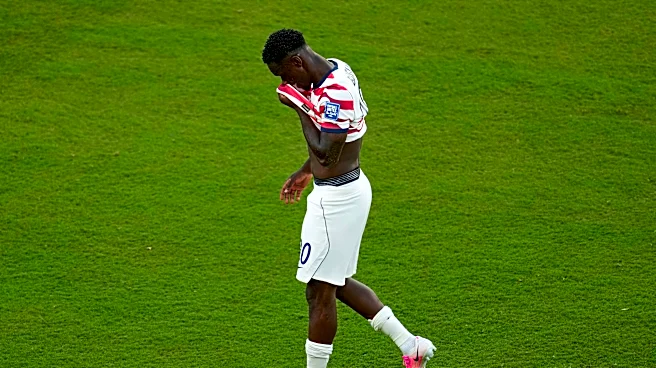
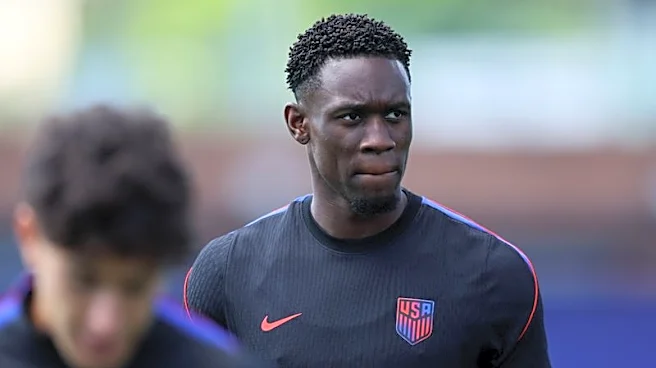
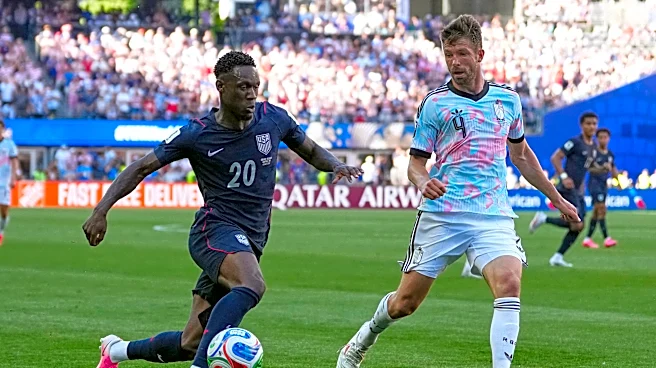
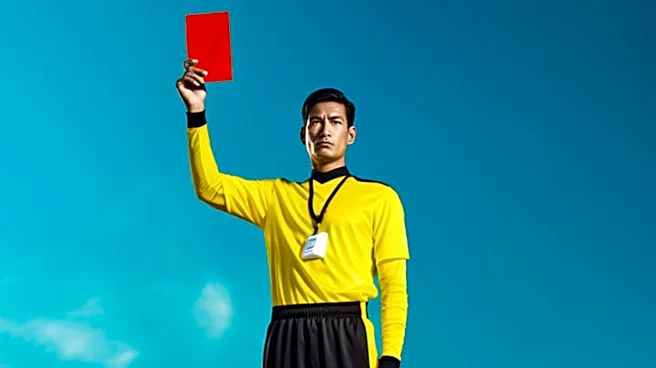
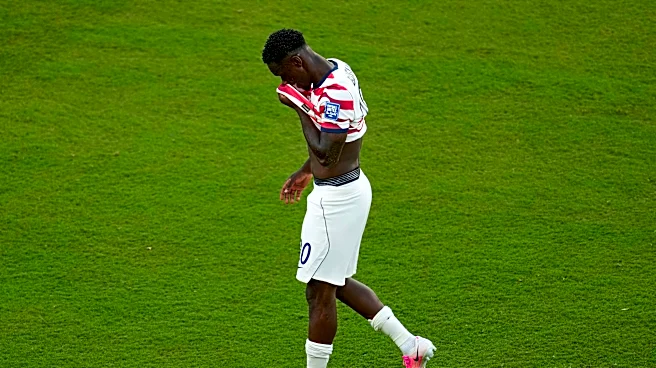
FIFA is facing criticism following its decision to suspend a ban on US striker Folarin Balogun, who received a red card during a match against Bosnia and Herzegovina. The standard disciplinary action would have resulted in a one-match suspension, preventing
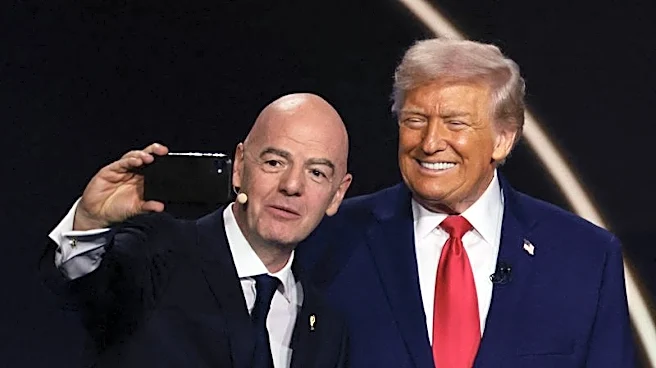
Balogun from playing in the US team's knockout match against Belgium. However, FIFA opted to suspend the ban for a year of probation. This decision has been met with backlash, particularly after reports surfaced that President Trump had discussions with FIFA President Gianni Infantino regarding the incident. UEFA, the governing body of European football, labeled FIFA's decision as 'unprecedented, incomprehensible, and unjustifiable.' The Royal Belgian Football Association also expressed concerns, questioning Balogun's eligibility and noting a lack of explanation for the decision reversal.
Why It's Important?
The controversy highlights the critical role of perceived fairness and consistency in maintaining trust in sports organizations. FIFA's decision has raised questions about the integrity of its disciplinary processes, potentially undermining stakeholder confidence. The involvement of high-profile figures like President Trump adds a layer of complexity, suggesting possible external influences on what should be impartial decisions. This situation underscores the broader implications for global sports governance, where transparency and equal application of rules are essential to uphold credibility. The backlash from UEFA and the Royal Belgian Football Association reflects the potential for international disputes and challenges to FIFA's authority, which could have long-term impacts on its reputation and operational effectiveness.
What's Next?
FIFA may face increased scrutiny and calls for greater transparency in its decision-making processes. Stakeholders, including national football associations and fans, might demand clearer guidelines and accountability measures to prevent similar controversies. The Royal Belgian Football Association's challenge could lead to formal appeals or reviews, potentially setting precedents for how such cases are handled in the future. Additionally, FIFA might need to address the perception of external influence, particularly in light of President Trump's reported involvement, to restore trust among its global audience.
Beyond the Headlines
This incident could prompt broader discussions about governance in international sports organizations. The need for consistent and transparent disciplinary actions is crucial to maintaining the integrity of competitions. The situation also raises ethical questions about the influence of political figures in sports, highlighting the delicate balance between diplomacy and impartiality. Long-term, FIFA may need to implement reforms to ensure that its processes are perceived as fair and unbiased, which could involve revisiting its governance structures and decision-making frameworks.