




What's Happening?
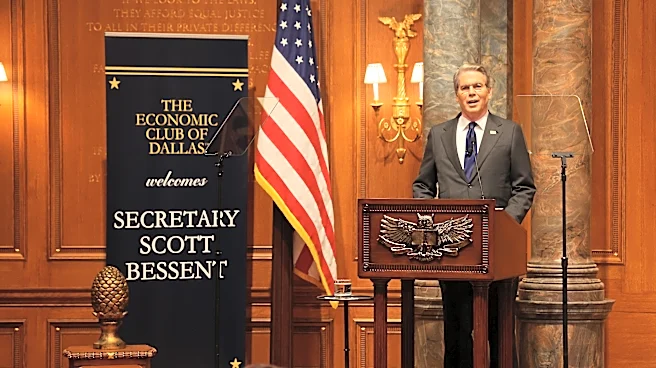
Treasury Secretary Scott Bessent has issued a warning to the Federal Reserve, cautioning against additional interest rate hikes. Speaking on CBS News' "Face the Nation," Bessent stated that financial conditions have already tightened significantly, and
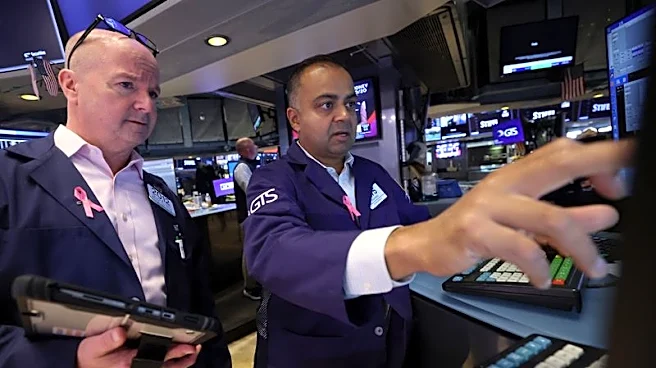
another substantial rate increase could worsen the current market downturn. His remarks come as the Fed prepares for its December 8-9 meeting, where officials are debating the extent of future rate adjustments. Bessent's concerns follow a period of market volatility, including a notable decline in the Nasdaq Composite and a significant loss in market value for companies like Nvidia. He attributed part of the market sell-off to political shifts and concerns over AI regulation, while also reassuring the public about the resilience of U.S. banks.
Why It's Important?
Secretary Bessent's intervention in the Federal Reserve's policy debate is significant because it highlights a potential divergence in economic strategy between the Treasury Department and the central bank. His warning suggests a concern that aggressive monetary tightening could inadvertently trigger or deepen an economic slowdown, impacting U.S. businesses and employment. For investors, this signals increased uncertainty regarding future interest rate trajectories, which can influence stock market performance and corporate borrowing costs. The debate over rate hikes directly affects the cost of capital for businesses, consumer spending power, and the overall economic outlook, making Bessent's stance a critical factor for financial markets and economic stability.
What's Next?
The Federal Reserve's upcoming December 8-9 meeting will be a focal point, as policymakers will decide on the next steps for interest rates. Secretary Bessent's public warning could influence the Fed's deliberations, potentially leading to a more cautious approach to rate hikes. Market participants will closely monitor the Fed's announcement for any indications of a shift in policy, which could impact stock prices, bond yields, and currency valuations. The ongoing discussion between government officials and the central bank underscores the complex interplay between fiscal and monetary policy in managing the U.S. economy, with potential implications for inflation, economic growth, and financial market stability.
Beyond the Headlines
The public disagreement between a Treasury Secretary and the Federal Reserve on monetary policy is a rare occurrence that can signal deeper concerns about the economic landscape. It raises questions about the independence of the central bank and the extent to which political considerations might influence its decisions. Such interventions can also affect market sentiment, potentially leading to increased volatility as investors try to interpret the implications for future economic policy. This dynamic highlights the delicate balance required to manage inflation while supporting economic growth, and the potential for differing perspectives among key economic institutions on the optimal path forward.