




What's Happening?
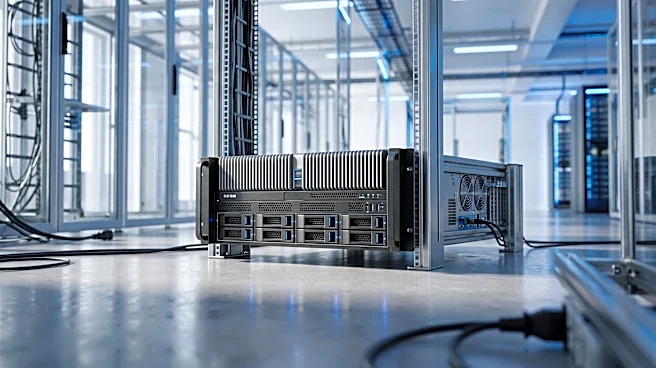
Rev Lebaredian, Vice President of NVIDIA, accompanied by his wife Rachel Lebaredian, visited the Eleveight AI factory in Gagarin, Armenia. This visit occurred as Eleveight AI prepares for a significant expansion of its infrastructure, focusing on the development
of high-capacity artificial intelligence (AI) computing systems within Armenia. According to a statement from Eleveight AI, as reported by Armenpress, Lebaredian showed considerable interest in the factory's engineering solutions, operational computing systems, infrastructure architecture, ongoing projects, and future expansion plans. Discussions also covered Armenia's consistent growth in AI infrastructure, positioning the country as an emerging global AI service provider. Eleveight AI has been expanding its capacity due to high demand since its launch earlier this year and aims to reach 50 MW capacity by 2027, further boosting Armenia's AI computing capabilities.
Why It's Important?
This visit underscores the growing global importance of AI infrastructure development and the strategic positioning of countries like Armenia in this sector. NVIDIA's engagement, through a high-ranking executive like Rev Lebaredian, signals potential future collaborations or investments that could significantly impact Armenia's technological landscape. For the U.S. technology sector, the expansion of AI computing capabilities in other nations can influence global supply chains for AI services and hardware. It also highlights the distributed nature of AI development, moving beyond traditional tech hubs. The focus on high-capacity AI computing systems is crucial for advancing various AI applications, from research to commercial deployment, which can have ripple effects on industries reliant on advanced AI processing.
What's Next?
Eleveight AI plans to continue its capacity expansion, aiming for a 50 MW capacity by 2027, which will substantially increase Armenia's AI computing power. This growth could attract further international investment and partnerships in the Armenian AI sector. The ongoing development of high-capacity AI computing systems in Armenia suggests a potential for the country to become a more significant player in the global AI infrastructure market. Future developments may include increased collaboration between NVIDIA and Armenian AI companies, potentially leading to advancements in AI research and deployment that could benefit the broader technological ecosystem. The continued growth of AI infrastructure in emerging markets like Armenia could also lead to new competitive dynamics in the global AI landscape.
Beyond the Headlines
The visit by NVIDIA's Vice President to an AI factory in Armenia points to a broader trend of decentralizing AI development and infrastructure. This could lead to a more diverse global AI ecosystem, reducing reliance on a few dominant regions. Ethically, the development of high-capacity AI computing systems in various countries raises questions about data sovereignty, international AI governance, and the equitable distribution of AI benefits and risks. Legally, it may necessitate new international agreements and standards for AI infrastructure and data handling. Culturally, the growth of advanced tech sectors in countries like Armenia can foster local innovation, create high-skilled jobs, and potentially shift global perceptions of technological leadership, contributing to a more multipolar technological world.