
What's Happening?
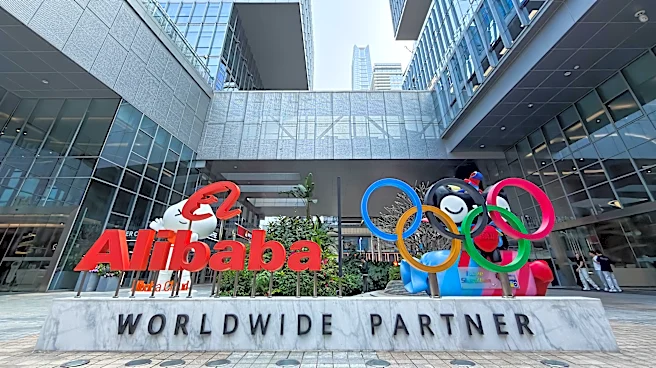
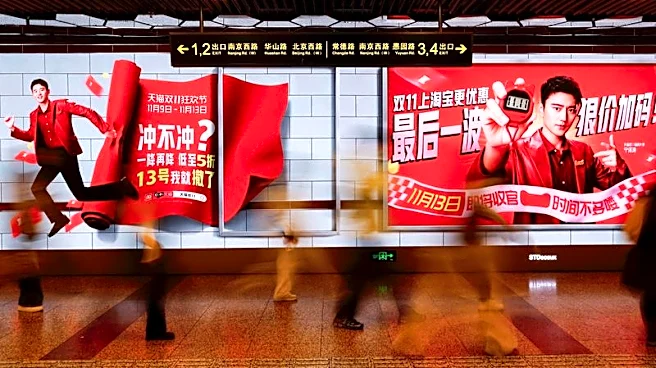
In 2009, Daniel Zhang, then overseeing Taobao Mall for Alibaba, initiated the first 11.11 sale, transforming a Chinese student holiday into what would become the world's largest shopping event. The concept
originated from Nanjing University in 1993, where students marked November 11 as a day for single individuals, symbolized by the four 'ones' resembling 'bare sticks.' Zhang leveraged this existing cultural reference to create a shopping incentive, asking merchants on Taobao Mall to offer at least 50% discounts. Twenty-seven merchants participated in the inaugural event, generating approximately 50 million yuan (around $7.5 million). This initial experiment laid the groundwork for what would evolve into a massive annual retail phenomenon, significantly impacting global e-commerce strategies.
Why It's Important?
Daniel Zhang's initiative with Singles' Day demonstrated the immense potential of creating a shopping holiday from a cultural concept, fundamentally altering retail strategies worldwide. This event proved that retailers could successfully engineer consumer demand around a specific date, leading to unprecedented sales volumes. Its success prompted other e-commerce giants, such as Amazon with its Prime Day, to create similar proprietary shopping events. The rapid growth of Singles' Day also accelerated the shift towards mobile shopping, with mobile devices accounting for a significant majority of sales within hours of the event. This model has influenced U.S. retailers to consider innovative approaches to seasonal sales and promotional events, pushing the boundaries of traditional retail calendars and consumer engagement tactics.
What's Next?
While Alibaba stopped publishing its total sales figures for Singles' Day in 2022, the event continues to evolve. The one-day sale has expanded into a month-long event, with Tmall opening presales weeks in advance and expecting a record one million brands to participate. This extended duration reflects a broader trend in e-commerce to sustain consumer engagement over longer periods rather than concentrating it into a single 24-hour window. Competitors continue to launch their own November sales, indicating the lasting impact of Zhang's original concept. The focus for retailers will likely shift towards personalized promotions and integrated online-to-offline experiences to maintain consumer interest in an increasingly crowded promotional landscape.
Beyond the Headlines
The creation of Singles' Day by Daniel Zhang highlights the power of cultural appropriation and strategic marketing in shaping consumer behavior on a global scale. It transformed a niche student celebration into a commercial juggernaut, demonstrating how a simple idea can be scaled into a massive economic engine. This phenomenon also underscores the increasing influence of e-commerce platforms in dictating consumer spending patterns and even creating new traditions. The shift from a single-day event to a month-long shopping festival also raises questions about consumer fatigue and the sustainability of such prolonged promotional periods. Furthermore, the event's success has spurred a global arms race among retailers to create their own 'invented holidays,' leading to a more competitive and promotional retail environment.