



What's Happening?
Thirty-two union leaders from 19 nations, including six U.S. union leaders such as Sean O’Brien of the Teamsters, are demanding that national governments cease procurement of goods and services from Amazon. This call to action, organized by the UNI global
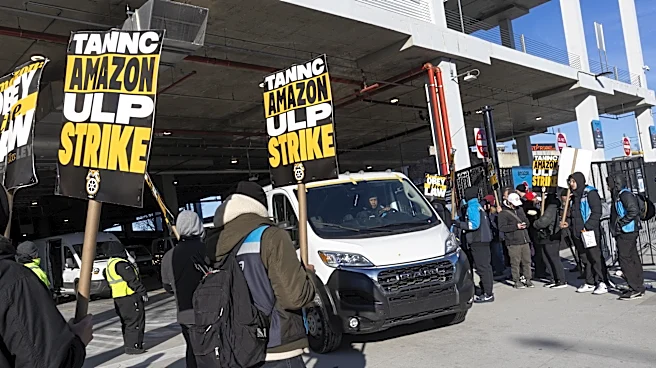
labor federation, precedes an International Day of Action planned for 'Black Friday' to protest Amazon's labor practices. The unions specifically target Amazon Web Services (AWS), which holds over $3.6 billion in contracts with U.S. government agencies, including the General Services Administration, the Department of Defense, and Homeland Security. The union leaders assert that Amazon's consistent record of disrespect for workers' fundamental rights should disqualify it from public contracts. They are urging governments to conduct comprehensive reviews of existing contracts, reform public procurement rules to mandate respect for workers' rights, and establish enforcement mechanisms to exclude companies that violate these rights from future tenders.
Why It's Important?
This global union initiative carries significant implications for Amazon's extensive government contracts and its business model in the U.S. and internationally. With AWS holding billions in U.S. government contracts, a successful campaign could lead to substantial financial losses for Amazon and potentially force a reevaluation of its labor policies. The demand for procurement reform could set a precedent, requiring all companies seeking government contracts to adhere to stricter labor standards, thereby impacting numerous industries. For U.S. taxpayers, this movement highlights how public funds are allocated to companies with controversial labor records. If governments heed these demands, it could empower labor unions, strengthen workers' rights, and shift the balance of power in favor of employees, potentially leading to higher wages and improved working conditions across various sectors. Conversely, Amazon and other companies relying on contract workers could face increased operational costs and regulatory scrutiny.
What's Next?
The UNI global labor federation plans an International Day of Action on 'Black Friday,' which will involve strikes and protests worldwide as part of their 'Make Amazon Pay' campaign. This event is expected to intensify pressure on governments and Amazon. Union leaders will continue to advocate for policy changes, pushing for legislation that mandates respect for workers' rights as a condition for public contracts. In the U.S., this could translate into increased lobbying efforts directed at Congress and federal agencies. Amazon is likely to counter these efforts, as evidenced by its past actions, such as suing in U.S. courts to declare the National Labor Relations Act unconstitutional and its current battle against New York City's proposed Delivery Protection Act. The outcome of these ongoing disputes will determine the future landscape of labor relations and government procurement policies.
Beyond the Headlines
Beyond the immediate financial and labor implications, this movement touches upon deeper ethical and legal considerations regarding corporate responsibility and the role of government in upholding labor standards. The unions' argument that public money should not fund companies that violate labor laws raises questions about the moral obligations of governments as major consumers. This initiative could spark a broader debate about the 'gig economy' and the classification of workers, particularly in the U.S., where companies like Amazon heavily rely on contract workers to avoid employee benefits and collective bargaining. The international coordination among unions also signifies a growing global solidarity movement, potentially leading to more unified actions against multinational corporations. This could reshape international labor law and corporate governance, pushing for a more equitable distribution of power between corporations and their workforces.