





What's Happening?
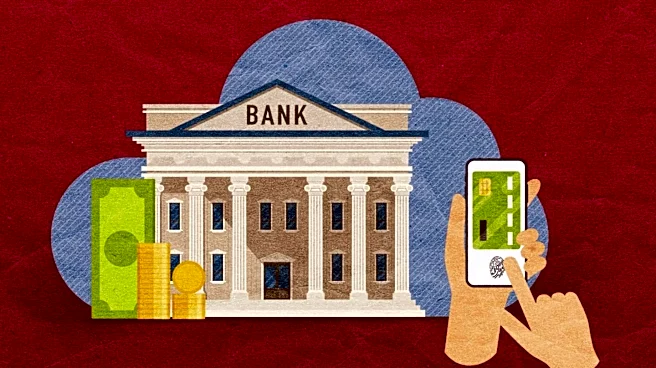
Merchants are being encouraged to implement specific user experience (UX) tweaks to maximize conversion rates for 'Pay by Bank' open banking payments. These payments offer advantages such as lower transaction fees, near-instant access to settled funds,
and no card chargeback issues compared to traditional card payments. Despite these benefits, many consumers still prefer familiar methods like cards or PayPal. To bridge this gap, experts recommend clear button labeling, specifically using 'Pay by Bank' to sit alongside 'Pay by Card' for a balanced choice. Additionally, displaying bank logos near the 'Pay by Bank' option is crucial for building trust, as users tend to rely on familiar institutional branding. Strategic placement of the 'Pay by Bank' option, ensuring it's visible without excessive scrolling, and avoiding an overwhelming number of bank choices are also highlighted as key factors for improving user adoption and conversion.
Why It's Important?
The adoption of 'Pay by Bank' open banking payments has significant implications for the U.S. financial landscape, offering a more cost-effective and efficient payment processing method for merchants. Lower transaction fees can lead to increased profit margins for businesses, potentially translating into more competitive pricing for consumers or greater investment in business growth. The near-instant access to settled funds improves cash flow for merchants, which is particularly beneficial for small and medium-sized enterprises. Furthermore, the elimination of card chargeback headaches reduces financial risk and administrative burden. For consumers, a streamlined and trustworthy 'Pay by Bank' option could offer a secure and convenient alternative to traditional payment methods, potentially fostering greater financial control and transparency. The broader shift towards open banking could also spur innovation in financial services, leading to new products and services that leverage direct bank-to-bank transfers.
What's Next?
Merchants are expected to increasingly adopt and refine their integration of 'Pay by Bank' options as awareness and infrastructure for open banking mature. The focus will likely be on continuous A/B testing of UX elements, such as button names, logo displays, and placement, to identify optimal configurations for different customer segments and markets. Payment technology providers will continue to develop solutions that simplify the integration of 'Pay by Bank' into existing checkout flows, potentially offering smart routing or customizable plugins. As more consumers become familiar with and trust open banking, the demand for seamless and intuitive 'Pay by Bank' experiences will grow, pushing merchants to prioritize these optimizations. Regulatory developments in open banking may also influence the pace and direction of these changes, potentially standardizing certain UX practices to ensure consumer protection and ease of use.
Beyond the Headlines
The push for optimizing 'Pay by Bank' conversion reflects a broader trend towards decentralization and increased consumer control within the financial sector. Open banking, by allowing consumers to securely share their financial data with third-party providers, empowers individuals with greater agency over their financial information and transactions. This shift challenges the traditional dominance of card networks and could lead to a more competitive payment ecosystem. Ethically, the emphasis on trust signals like bank logos and clear labeling underscores the importance of transparency and security in digital financial interactions. Culturally, as 'Pay by Bank' becomes more commonplace, it could reshape consumer expectations regarding payment convenience and data privacy. The long-term implication is a potential re-architecture of how financial transactions are conducted, moving towards a system that is more direct, efficient, and user-centric, with significant implications for financial institutions, technology providers, and consumers alike.