








What's Happening?
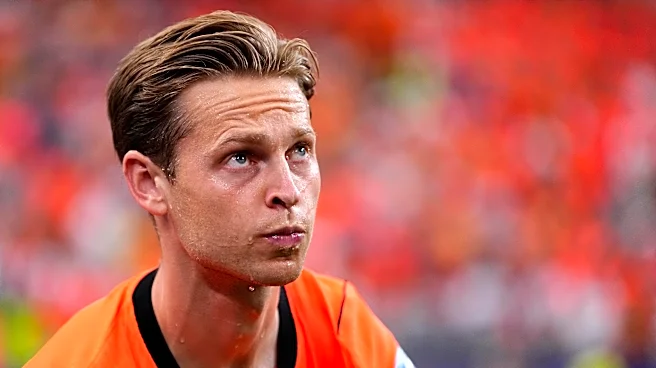
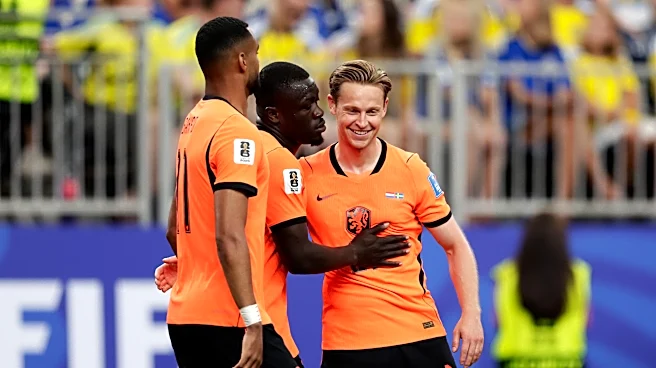
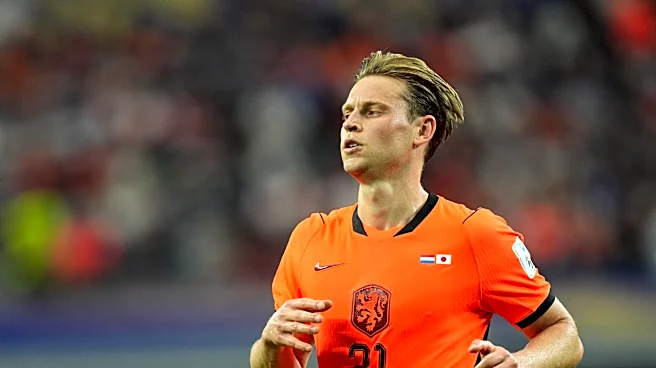
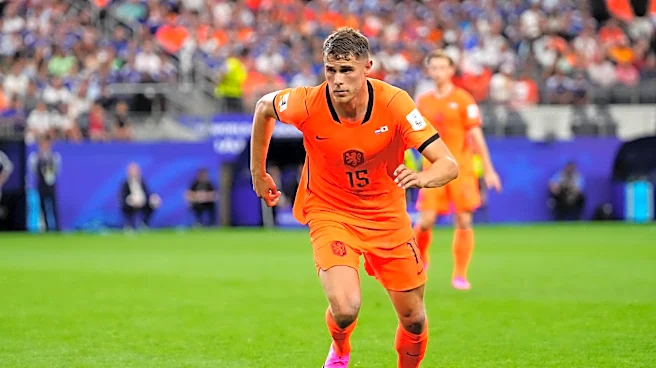
Barcelona midfielder Frenkie de Jong has publicly criticized football analysts following the Netherlands' 5-1 victory over Sweden in the 2026 World Cup. De Jong, who played a significant role in the match despite minor physical issues, expressed his frustration
with critics who claim he does not contribute enough offensively. In an interview with SBS6, de Jong stated that many people do not truly understand football, as they watch but do not see the nuances of the game. He defended his style of play, explaining that the decision to make certain passes depends on the match and the moment, and that critics often overlook these subtleties. De Jong also suggested that the Dutch public could benefit from valuing players more and not exaggerating criticisms to the point of labeling them as bad players.
Why It's Important?
De Jong's comments highlight a broader issue in sports analysis, where players often face intense scrutiny and criticism from analysts and fans. This can impact players' mental health and public perception, influencing their careers and market value. The situation underscores the need for a more nuanced understanding of sports performance, where context and strategy are considered alongside statistics. For the Netherlands, a team with a rich football history, such discussions are crucial as they navigate international competitions. De Jong's remarks may prompt a reevaluation of how players are assessed, potentially leading to more informed and balanced commentary in sports media.
What's Next?
As the World Cup progresses, de Jong and the Netherlands will continue to face scrutiny from analysts and fans. The team's performance in upcoming matches will be closely watched, and de Jong's role will likely be a focal point of discussion. His comments may also spark conversations among sports analysts about the need for more comprehensive evaluations of player performance. Additionally, the Dutch public and media might reflect on their approach to critiquing athletes, potentially leading to a shift in how players are supported and criticized.