
What's Happening?
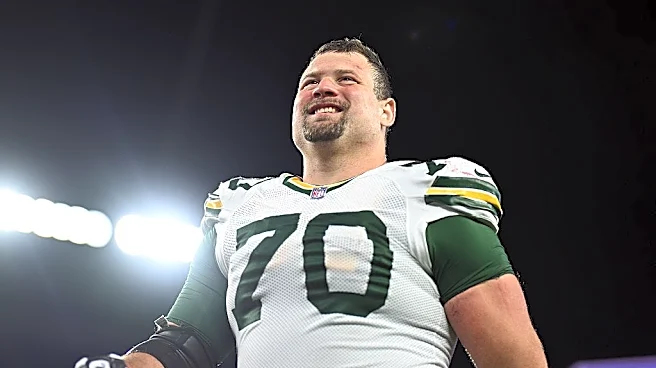
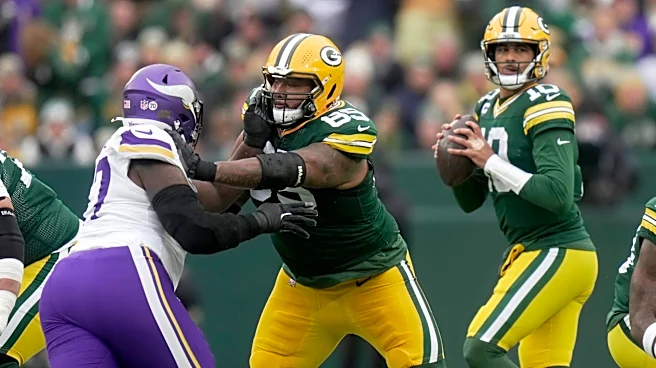
The Green Bay Packers' substantial $77 million contract for offensive lineman Aaron Banks is under scrutiny following his benching and continued struggles. Banks, signed in 2025 after four seasons with the San Francisco 49ers, was expected to be a consistent
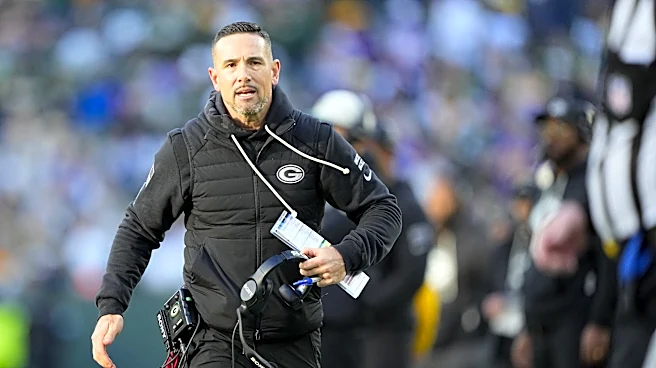
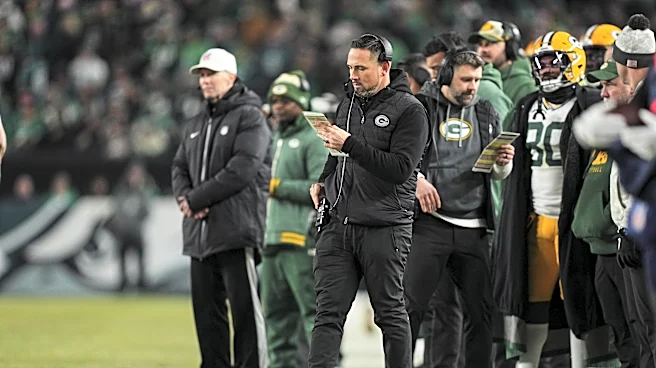
force on the interior offensive line. However, he has been benched from the starting lineup, with head coach Matt LaFleur opting to start Laken Tomlinson at left guard. Banks then competed for the starting right guard job against sixth-round draft pick Travis Glover, a battle he lost. In a recent game against the New England Patriots, Banks allowed three pressures, one sack, and one quarterback hurry on 31 pass-blocking snaps. The financial implications are significant: if the Packers were to move on from Banks after this season, they would incur $26 million in dead money, with no cap savings.
Why It's Important?
This situation highlights the high-stakes nature of NFL free agency and the potential financial pitfalls of large contracts that do not yield expected performance. The Packers' $77 million investment in Aaron Banks, now deemed a 'mistake' by some, underscores the critical importance of player evaluation and contract management. When a highly paid player is benched in favor of a lower-drafted rookie, it signals a significant misjudgment in talent assessment or development. The substantial dead cap hit of $26 million if Banks is released demonstrates how long-term contracts can severely restrict a team's financial flexibility and ability to acquire new talent, impacting future roster construction and competitiveness. This scenario affects not only the team's on-field performance but also its strategic financial planning for years to come.
What's Next?
Aaron Banks appears destined for the bench moving forward, with Laken Tomlinson and Travis Glover taking over the starting guard positions. The Packers desperately need Kevin Zeitler to return to the lineup from his ankle and triceps injuries, as his presence has been linked to improved running game performance. If Zeitler is healthy, he is expected to be the starting right guard. The team will have to contend with the significant financial burden of Banks' contract, as moving on from him would result in a substantial dead cap hit. This situation will likely influence the Packers' future free-agent decisions and draft strategies as they seek to avoid similar financial and performance missteps.
Beyond the Headlines
The Aaron Banks situation extends beyond a simple player underperforming; it delves into the complex economics and strategic decision-making within the NFL. The 'sunk cost fallacy' is evident here, where the large initial investment makes it difficult for the team to cut ties, even if the player is not performing. This scenario can create a ripple effect, impacting team morale, fan perception, and the general manager's reputation. It also highlights the inherent risks in guaranteeing large sums of money in a sport where injuries and performance declines can be unpredictable. The Packers' experience with Banks serves as a cautionary tale about the long-term consequences of high-value free-agent signings and the delicate balance between securing talent and maintaining financial prudence in a salary-capped league.