







What's Happening?
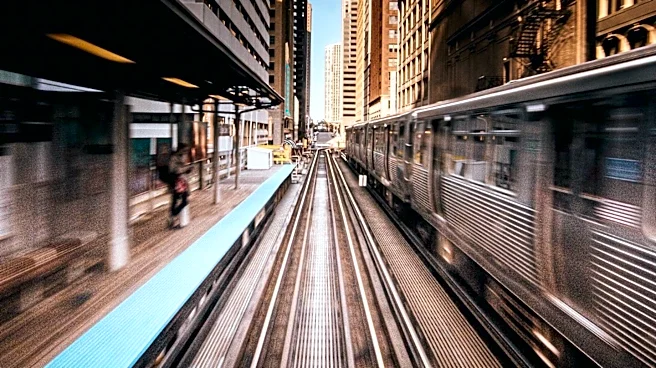
A new privately financed project, the O'Hare Flyer, aims to establish a 15-minute express rail service between downtown Chicago and O'Hare International Airport. The proposal, spearheaded by a group of Chicago business and civic figures, plans to utilize
existing freight railway rights-of-way owned by CSX, Canadian National, and Union Pacific. The project is estimated to cost approximately $2.25 billion and intends to operate battery-electric trains every 15 minutes. O'Hare Flyer has already secured a Letter of Intent with CSX and is in ongoing discussions with the other two railway companies. The developers emphasize that the project will not seek government subsidies or funding, distinguishing it from previous ambitious airport express proposals in Chicago that have not materialized.
Why It's Important?
This initiative is significant for Chicago as it addresses a long-standing need for faster and more efficient transportation between the city center and one of the world's busiest airports. The private financing model could offer a politically attractive alternative to publicly funded projects, especially given the city's history with uncompleted infrastructure like the Block 37 superstation. If successful, the O'Hare Flyer could significantly enhance Chicago's transportation infrastructure, improve the passenger experience for millions of travelers, and potentially reduce road congestion by diverting airport traffic from highways. The project also highlights a growing trend of leveraging existing infrastructure for new transportation solutions, which could serve as a model for other metropolitan areas facing similar challenges.
What's Next?
The immediate next steps for the O'Hare Flyer project involve securing agreements with Canadian National and Union Pacific to complete the necessary railway corridor. Following this, the project will need to undergo detailed engineering, environmental, and regulatory processes, as well as finalize its private financing. The developers aim to launch the service within the next five years, an ambitious timeline for a major urban rail project. Public officials, including Chicago Mayor Brandon Johnson, have responded positively to the concept, particularly its private investment aspect. The project also plans to engage local contractors and has signed a memorandum of understanding with the Chicago and Cook County Building and Construction Trades Council, indicating a focus on local job creation.
Beyond the Headlines
The O'Hare Flyer project, if realized, could have broader implications beyond just airport connectivity. By repurposing existing freight corridors for passenger service, it demonstrates an innovative approach to urban development that minimizes the need for entirely new infrastructure construction, which often faces significant community and environmental hurdles. The use of battery-electric trains also aligns with broader sustainability goals, potentially reducing carbon emissions associated with airport travel. Furthermore, the project's emphasis on private funding and its commitment to local labor agreements could set a precedent for future large-scale infrastructure developments in the U.S., influencing how public-private partnerships are structured and executed in the transportation sector.