
What's Happening?
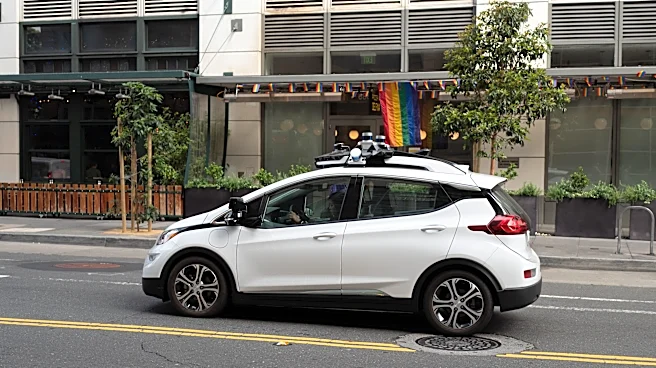
Wayve, a London-headquartered company specializing in assisted and automated driving solutions, is actively recruiting for a Robotaxi Technical Operations Manager in Sunnyvale, California. This role is crucial
for the company's expansion and operational readiness in new markets, particularly in the U.S. The manager will be responsible for transforming program plans into actionable launch strategies, covering vehicle commissioning, operator readiness, route and Operational Design Domain (ODD) validation, and safety sign-offs. The position also entails managing relationships with third-party operators, ensuring compliance with Service Level Agreements (SLAs), and driving corrective actions. Furthermore, the role involves coordinating software and model releases, managing field feedback, and reporting on product performance metrics such as autonomy time, pickups/drop-offs, and kilometers driven. Wayve, which has raised $2.58 billion USD in funding and is valued at $8.6 billion, is pioneering an end-to-end AI approach for autonomous driving, aiming to enable vehicles to learn directly from real-world experience.
Why It's Important?
This recruitment signifies Wayve's strategic intent to expand its autonomous vehicle operations and testing capabilities within the United States, specifically in California, a key hub for autonomous technology development. The Robotaxi Technical Operations Manager role is vital for establishing and scaling Wayve's presence, ensuring that its AI-driven autonomous vehicles can be safely and efficiently deployed in new markets. Success in this role will directly impact Wayve's ability to commercialize its technology and compete with other autonomous vehicle companies. The focus on managing third-party operators and ensuring regulatory compliance highlights the complex operational challenges in deploying autonomous services. For the U.S. autonomous vehicle industry, Wayve's expansion could introduce new competition and technological approaches, potentially accelerating the development and adoption of self-driving cars. The company's emphasis on an end-to-end AI approach, learning directly from real-world experience, could also influence industry standards and development methodologies.
What's Next?
The successful hiring of a Robotaxi Technical Operations Manager in Sunnyvale will likely lead to the establishment of a robust operational framework for Wayve's autonomous vehicle testing and potential deployment in California. This will involve setting up vehicle commissioning processes, training local operators, and validating routes and ODDs specific to the U.S. market. Wayve will need to navigate the regulatory landscape for autonomous vehicles in California, which is known for its stringent requirements. The company's ability to effectively manage third-party operators and integrate its AI platform with local partners will be critical for its expansion. Future steps could include pilot programs for robotaxi services, similar to its supervised Uber rides in London, and further investment in U.S.-based infrastructure and personnel. The insights gained from U.S. operations will also feed back into Wayve's product development, refining its AI models for diverse driving environments.
Beyond the Headlines
Wayve's expansion into the U.S. market, particularly with a focus on robotaxi operations, carries broader implications for urban mobility and the future of transportation. The company's 'mapless and hardware agnostic AI platform' represents a distinct approach in the autonomous vehicle industry, aiming for generalizable driving intelligence that can power any vehicle, anywhere. If successful, this could democratize autonomous technology, making it more accessible and adaptable across different vehicle manufacturers and geographical locations. The ethical and legal dimensions of deploying AI-driven vehicles, especially concerning safety, liability, and data privacy, will become increasingly prominent as Wayve scales its operations. The integration of autonomous vehicles into existing urban infrastructure will also necessitate significant policy adjustments and public acceptance. Furthermore, the job creation associated with these advanced technology roles, such as the Robotaxi Technical Operations Manager, highlights the evolving skill sets required in the future workforce.