





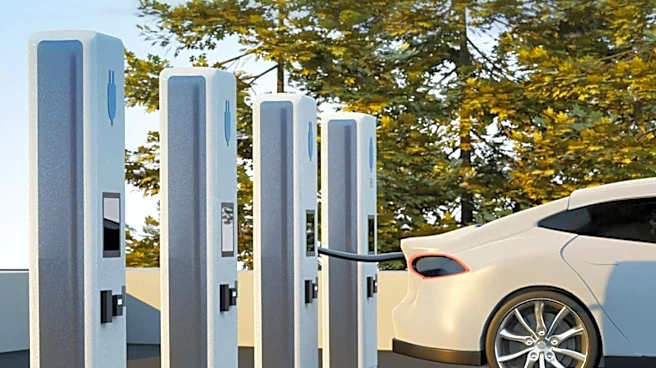



What's Happening?
The U.S. electric vehicle (EV) market saw a 21% decline in sales during the second quarter of 2026 compared to the same period in 2025. Sales dropped from 311,536 units in Q2 2025 to 247,226 units in Q2 2026. Despite this decline, the quarter was the best
since the record-breaking third quarter of 2025, which was influenced by the expiration of the U.S. EV tax credit. The recent sales figures were higher than those in Q4 2025 and Q1 2026, indicating a potential market rebound. However, the U.S. EV market share remains low at 5.9% of the overall auto market, lagging behind other regions like China and Europe.
Why It's Important?
The decline in EV sales highlights challenges in the U.S. market, such as competition from international markets and the need for supportive policies to boost adoption. The low market share compared to other regions underscores the urgency for the U.S. to enhance its EV infrastructure and incentives. This situation affects automakers, policymakers, and consumers, as the transition to electric vehicles is crucial for reducing carbon emissions and achieving sustainability goals. The performance of the EV market can also influence investment decisions and the strategic direction of automotive companies.
What's Next?
To address the decline, stakeholders may focus on expanding charging infrastructure, offering incentives, and promoting consumer awareness about the benefits of EVs. Automakers might accelerate the development of new models and technologies to attract buyers. Policymakers could consider revising tax credits and regulations to encourage EV adoption. The market's recovery will depend on these efforts and the broader economic environment, including energy prices and technological advancements.