




What's Happening?
During the Thanksgiving holiday weekend, 'The Hunger Games: Sunrise on the Reaping' maintained its top position at the domestic box office, earning an additional $56.8 million over the weekend. Its five-day haul, including Wednesday and Thursday, is estimated
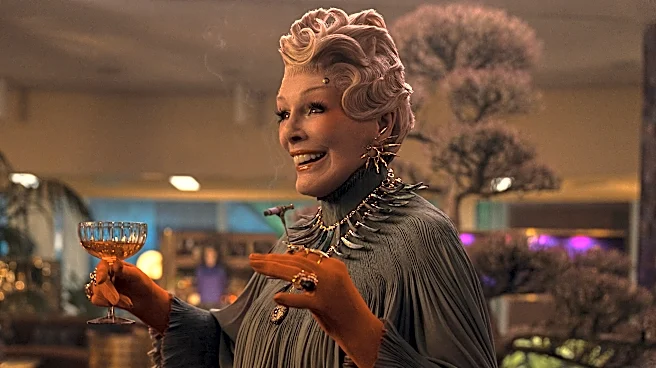
at $83.5 million, bringing its total in just two weekends to $419.2 million. In contrast, Walt Disney Animation's new original feature, 'Hexed,' had a disappointing debut, securing $32 million in its first five days, with $20 million from Friday through Sunday. Produced at a reported cost of $200 million, 'Hexed' also garnered $25 million internationally, totaling $57 million globally. Critics offered mixed reviews for the teen witch story, though audiences gave it an A- CinemaScore. Another new release, 'Focker In-Law,' the latest installment in the 'Meet the Parents' franchise, earned $39.5 million in its first five days, with $26.4 million over the weekend. Overall, the Thanksgiving box office was down over 23% compared to the previous year, but the annual domestic box office is still projected to surpass $9.2 billion this weekend and potentially exceed $10 billion for the first time since the pandemic.
Why It's Important?
The box office performance over the Thanksgiving weekend offers a significant indicator of current consumer spending habits and the evolving landscape of the film industry. 'The Hunger Games' continued success highlights the enduring appeal of established franchises and their ability to draw repeat viewers, a crucial factor in a competitive market. Conversely, the underperformance of Disney's 'Hexed' underscores the challenges faced by original animated features, especially those with substantial production budgets, in capturing audience attention against well-known intellectual properties. This trend suggests that studios might increasingly prioritize sequels and established franchises over new, unproven concepts, impacting creative diversity in mainstream cinema. The overall softer Thanksgiving box office, despite the annual domestic box office being up, indicates that while moviegoing is recovering post-pandemic, specific holiday weekends may not always deliver the expected surge in attendance. This could influence future release strategies for major studios, particularly regarding holiday scheduling and the balance between original content and franchise extensions.
What's Next?
The film industry will closely monitor the performance of upcoming major releases, particularly 'Avengers: Doomsday' and 'Dune: Part Three,' both scheduled for December 18. These films are expected to significantly contribute to the annual domestic box office, with industry experts like Paul Dergarabedian of Rentrak anticipating the total to surpass $10 billion for the first time since the pandemic. The contrasting performances of 'The Hunger Games' and 'Hexed' will likely inform future production and marketing strategies for studios. Disney, in particular, may re-evaluate its approach to original animated content versus sequels, especially given the high production costs involved. The trend of audiences favoring established franchises could lead to an even greater emphasis on developing and expanding cinematic universes. Additionally, the industry will continue to analyze audience demographics and preferences, as seen with 'Hexed' appealing to younger women and 'Focker In-Law' attracting an older demographic, to better tailor their content and promotional efforts.
Beyond the Headlines
The box office results reflect broader shifts in entertainment consumption and audience expectations. The strong performance of 'The Hunger Games' suggests that in an era of abundant streaming options, theatrical releases need to offer a compelling, communal experience that justifies the trip to the cinema. This often comes from large-scale spectacles or beloved franchises. The struggle of 'Hexed' points to a potential 'sequel fatigue' for original animated films, where audiences might be more discerning about new stories, especially when compared to the guaranteed appeal of established characters. This could lead to a more cautious approach from studios regarding creative risks and investment in new intellectual properties. Furthermore, the overall dip in Thanksgiving box office compared to last year, despite the annual growth, might indicate that economic factors or changing holiday traditions are influencing moviegoing habits. The industry's reliance on a few tentpole releases to drive annual revenue highlights a concentration of power and risk, where the success or failure of a handful of films can significantly impact the entire market.