





What's Happening?
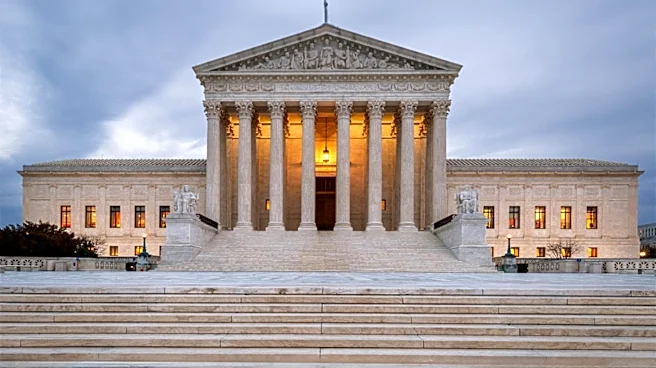
The U.S. Supreme Court has issued a deadline of September 25 for California Attorney General Rob Bonta and 11 other state attorneys general to respond to an objection filed by Iowa and Montana regarding their antitrust lawsuit against the proposed $110
billion Paramount-Warner Bros. Discovery merger. This directive follows a motion from Republican Attorneys General Brenna Bird of Iowa and Austin Knudsen of Montana, who requested the court to block what they describe as a 'politicized' lawsuit. Bird and Knudsen argue that the ongoing litigation is negatively impacting the economies of Iowa and Montana and harming 'tens of thousands of employees of Paramount and Warner Bros., as well as hundreds of millions who watch their movies, shows, and news through a variety of sources.' They contend that the Supreme Court is the appropriate venue to resolve this 'controversy between sovereigns' and should intervene to ensure a swift and fair resolution of the merger. Paramount has agreed to delay the merger's closing until five days after a trial outcome or June 1, 2027, whichever comes first, with a final deadline of June 4, 2027.
Why It's Important?
This Supreme Court order is significant as it directly impacts a major media industry merger valued at $110 billion, potentially shaping the future landscape of entertainment and news distribution in the U.S. The intervention by Iowa and Montana highlights a growing trend of states challenging federal regulatory processes or other states' legal actions, raising questions about jurisdictional boundaries and the role of state attorneys general in national economic matters. The dispute also brings to light the financial implications of delayed mergers, with Paramount CEO David Ellison facing a 'ticking fee' of 25 cents per share, amounting to $650 million per quarter or $7 million per day, starting October 1, if the deal is not closed. Furthermore, a $7 billion termination fee is at stake if the merger fails due to regulatory issues. The outcome of this legal challenge could set a precedent for how large-scale corporate mergers are reviewed and potentially challenged by state entities, affecting future business consolidations across various sectors.
What's Next?
The immediate next step is the September 25 deadline for California Attorney General Rob Bonta and the other state attorneys general to file their responses to Iowa and Montana's objection. Following this, a hearing is scheduled for September 24 to address Paramount CEO David Ellison's demand that Bonta and the other state AGs post a bond to cover the estimated $1.9 billion in ticking fees incurred during the delay. While the Supreme Court is considering Iowa and Montana's request for 'expedited consideration,' it is not guaranteed to take up the case. Even if oral arguments are scheduled between October 2026 and the merger trial in March 2027, a decision could take months. The resolution of these legal challenges will determine the timeline and ultimate fate of the Paramount-Warner Bros. Discovery merger, with significant financial consequences for the involved companies and potential ripple effects across the media industry.
Beyond the Headlines
Beyond the immediate legal and financial implications, this case touches upon deeper issues concerning regulatory oversight and the balance of power between state and federal authorities in antitrust matters. The argument by Iowa and Montana that the litigation is 'politicized' suggests a broader concern about the use of legal challenges to influence corporate decisions, potentially introducing political considerations into economic transactions. The debate over who should bear the cost of merger delays—the companies involved or, as argued by Bonta, the taxpayers if a bond is imposed—raises questions about accountability and the financial burden of regulatory processes. This situation could also influence how companies structure future merger agreements, particularly regarding ticking fees and termination clauses, to mitigate risks associated with prolonged legal battles. The outcome may also prompt a re-evaluation of the scope and impact of state-level antitrust actions on national and international corporate activities.