



What's Happening?
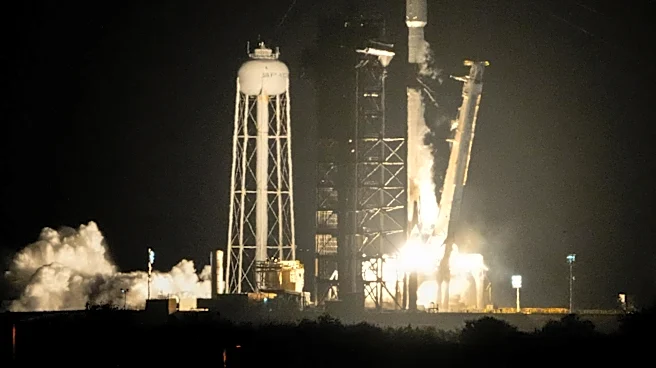
Blue Origin has identified a malfunction in the main oxygen valve of a BE-4 engine as the cause of an explosion that destroyed a New Glenn rocket during a static fire test in May. The incident occurred at Launch Complex 36 in Cape Canaveral, damaging
the company's sole orbital launch site. The BE-4 engines, which power the New Glenn rocket, are fueled by liquid methane and liquid oxygen. Blue Origin has conducted extensive tests to understand the failure and is implementing modifications to the valve. The company aims to return the New Glenn to flight by the end of the year, with repairs underway at the launch complex.
Why It's Important?
The explosion and subsequent grounding of the New Glenn rocket have significant implications for Blue Origin and its partners. The New Glenn is crucial for launching Amazon's Leo satellites and other payloads, including NASA's lunar landers. The delay affects not only Blue Origin's commercial operations but also its strategic partnerships with entities like the United Launch Alliance (ULA), which uses the BE-4 engines for its Vulcan rocket. The incident underscores the challenges in developing reliable space launch systems and the potential ripple effects on satellite deployment schedules and space exploration missions.
What's Next?
Blue Origin is working to retrofit existing engines with the modified valve and aims to have the updated hardware ready by the end of the month. The company is also conducting a thorough investigation to ensure a safe return to flight. ULA, which also uses BE-4 engines, is coordinating with Blue Origin to implement necessary modifications for its Vulcan rocket. The space industry will be closely watching Blue Origin's progress, as the successful return of the New Glenn is vital for multiple stakeholders, including NASA and commercial satellite operators.