






What's Happening?
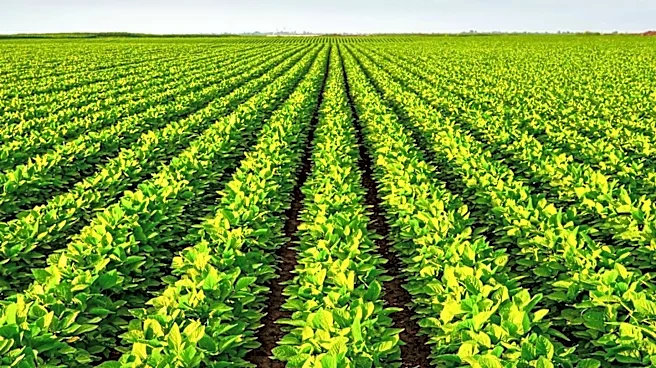
A study conducted by researchers at Purdue University has revealed that early planting of soybeans generally results in higher yields compared to mid- or late planting dates. The research, published in the journal Weed Technology, involved field experiments
at three Purdue Agricultural Centers in Indiana during 2024 and 2025. The study found that early planting led to greater yields at most sites, except for one instance where lower temperatures caused a reduction in stand and yield. Despite early planting resulting in slightly thinner soybean stands and increased injury from residual herbicides, these factors did not lead to yield loss. However, early planting posed challenges for weed control, as it resulted in higher weed density and biomass, increasing the selection pressure for herbicide-resistant weeds.
Why It's Important?
The findings of this study are significant for soybean farmers and the agricultural industry, as they highlight the benefits and challenges of early planting. Higher yields from early planting can enhance profitability for farmers, but the increased difficulty in managing weeds could lead to long-term issues with herbicide resistance. This research underscores the need for effective weed management strategies to accompany early planting practices. The study also provides valuable insights into the impact of planting dates on crop yields and the role of herbicides, which can inform future agricultural practices and policies.
What's Next?
Farmers and agricultural stakeholders may need to consider adjusting their planting strategies to balance the benefits of early planting with the challenges of weed management. Further research could explore alternative weed control methods or the development of new herbicides to address the increased selection pressure for resistant weed biotypes. Additionally, agricultural extension services might focus on educating farmers about the implications of early planting and effective weed management techniques.