





What's Happening?
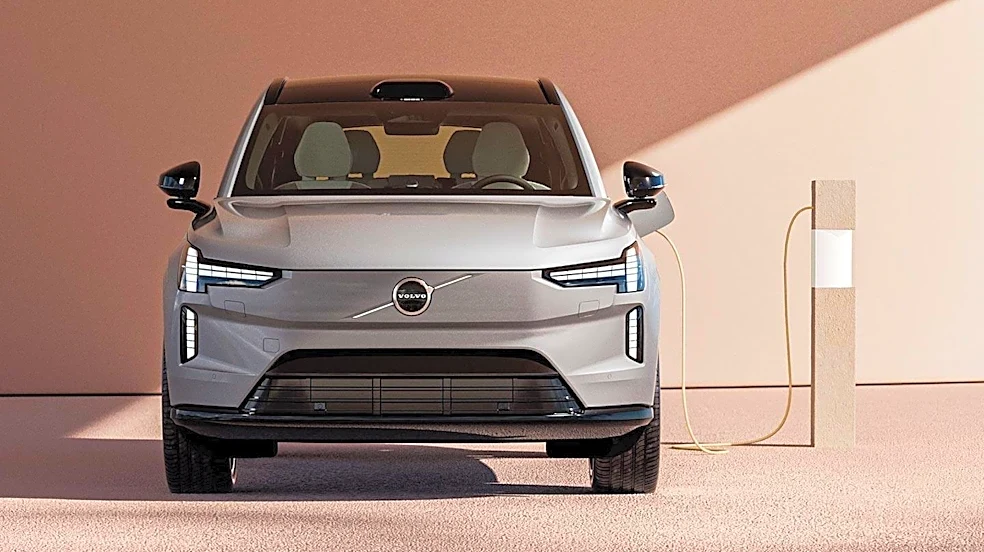
Volvo is experiencing substantial production challenges with its new EX60 midsize electric SUV, leading to significant delays in vehicle allocations for U.S. retailers. The company had aimed to produce 2,000 EX60s per week, but current output is only
about 10% of that target. These manufacturing problems, occurring at Volvo's Torslanda plant in Sweden, are attributed to the adoption of new, industry-first manufacturing concepts like megacasting and cell-to-body construction, for which there are no existing blueprints. As a result, Volvo sold approximately 500 EX60s worldwide in July, which then dropped to around 250 in August. The company had initially hoped to sell 7,000 EX60s in the U.S. this year, but will now prioritize deliveries to Europe, where EV adoption rates are higher. This shift means U.S. retailers will receive no additional EX60 allocations for the remainder of the current year, with significant volume not anticipated until the second half of 2027. Volvo's new electric lineup in the U.S. also includes the three-row EX90, with the EX60 P10 AWD having an EPA-estimated range of up to 330 miles.
Why It's Important?
The production setbacks for Volvo's EX60 electric SUV carry significant implications for the U.S. automotive market and Volvo's strategic positioning within it. The delay means U.S. consumers eager for new electric vehicle options will face prolonged waits, potentially driving them to competitors. This situation could undermine Volvo's efforts to expand its electric vehicle footprint in the U.S., a critical market for EV growth. For Volvo dealerships, the lack of inventory for a highly anticipated model like the EX60 could lead to lost sales and reduced profitability, impacting their ability to meet customer demand and maintain market share. The company's global sales have already seen a downturn, with third-quarter deliveries decreasing by 8.7% in the United States. This production issue also highlights the complexities and risks associated with implementing innovative manufacturing technologies, as initial ramp-up phases can be more challenging and time-consuming than anticipated. The decision to prioritize European deliveries further emphasizes the competitive nature of the global EV market and the varying rates of EV adoption across regions.
What's Next?
U.S. retailers are expected to experience a severe shortage of the Volvo EX60 throughout the rest of the current year and potentially the first half of 2027, with significant volume not expected until the second half of 2027. While a substantial number of already allocated EX60s are projected to reach the U.S. in early 2027, the overall impact on inventory will be prolonged. Volvo has scrapped its 2026 volume and cash flow outlook and has declined to provide new short-term guidance due to market uncertainty. The company will continue to focus on resolving the manufacturing issues at its Torslanda plant to increase production efficiency. Prospective buyers in the U.S. who are not in a rush for a new car may consider waiting, while others might explore alternative electric SUV options from competing brands. Volvo will likely continue to promote its other electric models, such as the EX90, and its refreshed XC40, XC60, and XC90 models with new PHEV systems, to mitigate the impact of the EX60 delays.
Beyond the Headlines
The production challenges faced by Volvo with its EX60 electric SUV underscore a broader trend within the automotive industry as it transitions to electric vehicles and adopts advanced manufacturing techniques. The use of 'megacasting' and 'cell-to-body' construction, while promising for efficiency and structural integrity, introduces novel complexities that can lead to unforeseen delays and cost overruns. This situation highlights the delicate balance between innovation and execution in a rapidly evolving market. Furthermore, Volvo's decision to prioritize European deliveries over the U.S. market, despite initial sales targets, reflects the global disparities in EV adoption rates and regulatory environments. This could inadvertently affect brand loyalty and market perception in the U.S., potentially making it harder for Volvo to regain momentum once production stabilizes. The incident also raises questions about supply chain resilience and the ability of automakers to scale up new technologies without significant disruptions, impacting not only sales but also investor confidence and long-term strategic planning.