
What's Happening?
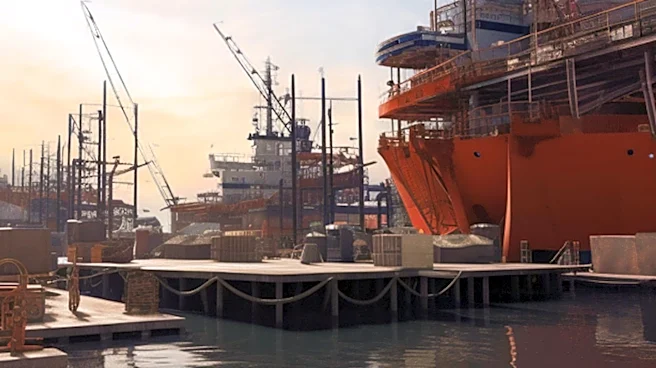
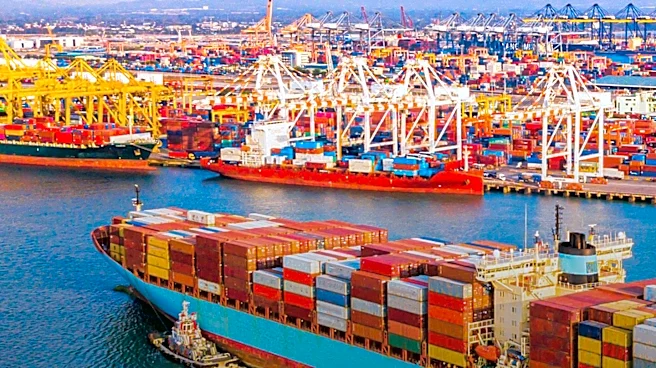
Pennsylvania Governor Josh Shapiro has announced an $837 million investment in PhilaPort, the Port of Philadelphia, marking the largest expansion in its history. This investment comprises $371.5 million in capital
funding from the Commonwealth, which is expected to unlock an additional $200 million in private-sector investment and $266 million in federal support. The project aims to create over 6,000 new jobs for Pennsylvanians and generate $45 million in state and local taxes. The expansion will significantly increase PhilaPort's capacity, with container capacity projected to grow by 122% and auto capacity by 18%. Key initiatives include the construction of a new 2,000 linear foot berth at Southport Marine Terminal, the first in 50 years, and the acquisition of the 152-acre Mustin Yard parcel to expand opportunities for auto and container cargo. Additionally, investments will be made in improvements at the Tioga Marine Terminal and the acquisition of new cranes and equipment.
Why It's Important?
This historic investment in PhilaPort is crucial for Pennsylvania's economic growth and its role in global trade. By significantly expanding container and auto capacity, the port will enhance its competitiveness and ability to handle increased cargo volumes, strengthening supply chains and supporting various industries. The creation of over 6,000 new jobs will provide substantial economic opportunities for residents, contributing to local employment and tax revenues. This development positions PhilaPort as a major player in international commerce, attracting new businesses and fostering regional economic development. The combination of public and private funding demonstrates confidence in the port's future and its potential to drive long-term prosperity. Furthermore, the investment in infrastructure improvements, such as new berths and equipment, will modernize the port's operations, making it more efficient and resilient to future trade demands. This initiative underscores the importance of strategic infrastructure investments in bolstering regional economies and national trade capabilities.
What's Next?
The PhilaPort expansion project will proceed with the construction of new facilities, including the 2,000 linear foot berth at Southport Marine Terminal and improvements at Tioga Marine Terminal. The acquisition and development of additional properties in the Southern Port District will also be undertaken to further enhance container capacity. These developments are part of PhilaPort's 'Destination 2040 Strategic Plan,' indicating a long-term vision for growth and modernization. The influx of private-sector and federal funding will be leveraged to support these initiatives. The creation of new jobs will occur as construction progresses and as the expanded port operations require additional workforce. Stakeholders, including industry leaders, labor unions, and local communities, will be involved in the ongoing development and implementation phases. The success of this expansion will be measured by its ability to meet increased trade demands, generate sustained economic benefits, and maintain PhilaPort's status as a productive port.
Beyond the Headlines
This investment in PhilaPort reflects a broader strategic understanding of the critical role that port infrastructure plays in national economic security and global competitiveness. Beyond the immediate economic benefits, the expansion could lead to a ripple effect across various sectors, including logistics, manufacturing, and retail, as improved trade efficiency reduces costs and increases market access. The emphasis on creating thousands of jobs, particularly for individuals without college degrees, highlights a commitment to inclusive economic growth and workforce development. This project also underscores the importance of public-private partnerships in funding large-scale infrastructure initiatives. The long-term implications include enhanced regional resilience to supply chain disruptions and a stronger position for Pennsylvania in the global marketplace. The investment also serves as a testament to the enduring value of traditional trade routes and the continuous need for modernization to meet evolving global demands.