










What's Happening?
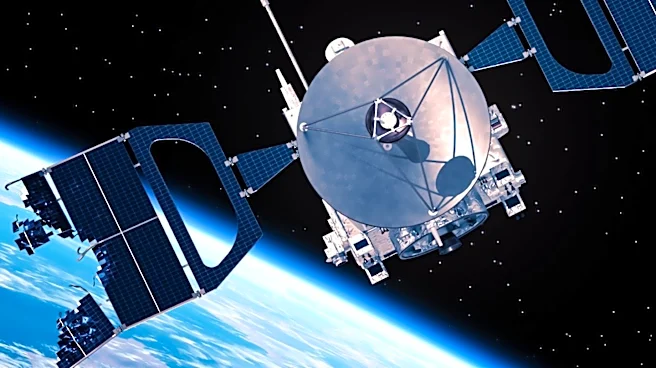
Reflect Orbital has been granted a license by the FCC to launch its first in-space demonstration satellite, Eärendil-1, which aims to test the company's technology of using mirrors to reflect sunlight to Earth. The mission is part of a broader plan to deploy
a constellation of 50,000 mirrors. However, the project has faced criticism from astronomers and environmentalists who are concerned about the potential impact on space science and natural ecosystems. The FCC's approval is limited to a single mission, and the agency has not addressed the broader environmental and scientific concerns associated with the larger constellation.
Why It's Important?
The FCC's decision to approve Reflect Orbital's mission highlights the regulatory challenges of balancing technological innovation with environmental and scientific considerations. The project could pave the way for new applications of space technology, such as providing light during nighttime or in areas with limited sunlight. However, it also raises concerns about the potential disruption to astronomical observations and ecological systems. The outcome of this mission could influence future regulatory decisions and the development of similar technologies, impacting industries ranging from space exploration to environmental management.
What's Next?
Reflect Orbital plans to demonstrate that its technology can operate without significant negative impacts on astronomy and the environment. The company aims to prove that reflected sunlight can be controlled and used responsibly. If successful, this could lead to further regulatory approvals and the expansion of their satellite constellation. Ongoing dialogue with scientific and environmental communities will be crucial to address concerns and ensure that the technology is developed in a sustainable manner. Future regulatory reviews may consider the broader implications of deploying large-scale space-based technologies.