




What's Happening?
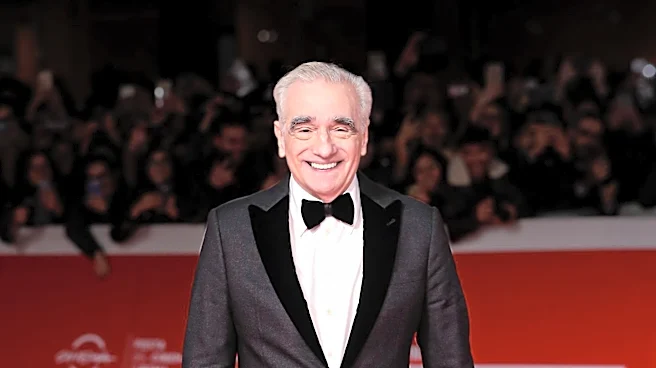
Renowned American film director Martin Scorsese revealed that his planned film adaptation of 'Cleopatra,' which was set to star Angelina Jolie, was canceled due to the fallout from the 2014 Sony cyberattack. The project, which had a script ready and reportedly
included Leonardo DiCaprio and Daniel Day-Lewis in discussions for roles, was a significant undertaking for Scorsese. The cyberattack on Sony Pictures Entertainment followed controversy surrounding Seth Rogen's film 'The Interview,' a comedy that depicted a plot to assassinate North Korean leader Kim Jong Un. Scorsese expressed lasting frustration over the loss of the film, indicating that the studio's subsequent issues directly impacted the production of his epic. The director had won a bid in the early 2010s to direct a Scott Rudin-produced version of 'Cleopatra,' based on the biography 'Cleopatra: A Life,' with Jolie cast in the titular role. This cancellation represents a significant 'what-if' in Hollywood history, preventing a potentially star-studded and critically acclaimed historical drama from reaching the screen.
Why It's Important?
The cancellation of Martin Scorsese's 'Cleopatra' project highlights the far-reaching and unpredictable consequences of cyberattacks on major corporations, particularly within the entertainment industry. The Sony cyberattack, attributed to North Korea, not only led to the leak of sensitive company data and internal communications but also had tangible effects on film production schedules and creative endeavors. This incident underscores the vulnerability of large studios to digital threats and how geopolitical events, even those seemingly unrelated to film production, can disrupt major projects. For Scorsese, a director known for his meticulous approach and ambitious storytelling, the loss of 'Cleopatra' represents a missed opportunity to tackle a historical epic, a genre he has expressed interest in. The incident also serves as a cautionary tale for the industry regarding cybersecurity measures and the potential for external pressures to influence artistic output and financial investments in film.
What's Next?
While the specific 'Cleopatra' project with Scorsese and Jolie is definitively off the table, the broader impact of such cyber incidents continues to shape how studios approach security and risk management. The entertainment industry has since invested more heavily in cybersecurity protocols to prevent similar breaches and protect intellectual property and ongoing productions. For Scorsese, he has moved on to other acclaimed projects, but the 'Cleopatra' cancellation remains a point of frustration. The legacy of the Sony hack continues to influence discussions around digital security in Hollywood, prompting ongoing vigilance. Future large-scale productions are likely to be developed with heightened awareness of potential external threats, including cyber warfare and political sensitivities that could impact international distribution or production viability.
Beyond the Headlines
The abandonment of Scorsese's 'Cleopatra' due to the Sony cyberattack reveals a deeper intersection between global politics, digital security, and artistic freedom. The incident demonstrated how a film's content, even a comedy like 'The Interview,' could trigger international incidents with cascading effects on unrelated projects. This raises questions about self-censorship in Hollywood and the extent to which studios might shy away from controversial topics to avoid similar repercussions. Furthermore, the event highlighted the fragility of creative endeavors in an increasingly interconnected and vulnerable digital world. The loss of a film with such a high-caliber director and cast also underscores the cultural cost of cyber warfare, where potential cinematic masterpieces can be collateral damage in geopolitical disputes, impacting not just financial bottom lines but also the artistic landscape.