
What's Happening?
Director Luca Guadagnino has confirmed that his planned adaptation of Bret Easton Ellis's novel 'American Psycho' is no longer moving forward. Guadagnino announced the cancellation on Deadline’s Crew Call podcast, stating that the project, which featured
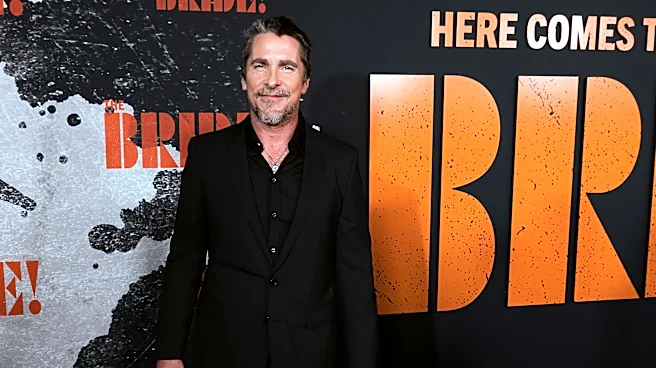
a script by Scott Z. Burns, is 'not happening for me, as we speak.' He did not provide specific reasons for the project's halt. Lionsgate had initially announced the film in 2024, positioning it as a fresh adaptation of the novel rather than a remake of Mary Harron's 2000 film starring Christian Bale. The distinction was significant, as the novel is considerably more graphic than the previous film. Reports had indicated that actors such as Austin Butler and Jacob Elordi were considered for the role of Patrick Bateman. Despite the cancellation, the script by Scott Z. Burns is complete, leaving open the possibility that Lionsgate might assign the project to another director or shelve it indefinitely. Guadagnino's next project is a biopic about Sam Altman, titled 'Artificial,' scheduled for a limited release in December 2026.
Why It's Important?
The cancellation of Luca Guadagnino's 'American Psycho' adaptation is significant for the film industry, particularly for fans of the original novel and the 2000 film. Guadagnino, known for his intense and often unsettling cinematic style in films like 'Suspiria' and 'Bones and All,' was seen by many as a director uniquely suited to capture the darker, more savage elements of Ellis's novel. His involvement suggested a potentially groundbreaking and disturbing reinterpretation of the material, which could have offered a fresh perspective on the character of Patrick Bateman and the social commentary embedded in the story. The project's demise leaves a void for those anticipating a more faithful and brutal adaptation. It also highlights the inherent challenges in revisiting iconic or controversial source material, especially when the previous adaptation is highly regarded. The decision not to proceed with a director of Guadagnino's caliber suggests potential difficulties in securing financing, creative differences, or other production hurdles that often plague ambitious film projects. This outcome may lead studios to be more cautious about greenlighting new adaptations of culturally significant but challenging works.
What's Next?
With Luca Guadagnino no longer attached, the future of the 'American Psycho' adaptation remains uncertain. Lionsgate, which initiated the project, now faces a decision regarding the completed script by Scott Z. Burns. The studio could opt to find another director to take on the adaptation, potentially seeking a filmmaker with a different vision or approach. Alternatively, Lionsgate might decide to put the project on indefinite hold, allowing the material to rest, especially given the enduring legacy of Mary Harron's 2000 film. The cancellation also frees up Guadagnino to focus entirely on his upcoming Sam Altman biopic, 'Artificial,' which is slated for release in late 2026 and early 2027. For fans of the 'American Psycho' narrative, the immediate future holds no new cinematic interpretation, reinforcing the idea that some stories are difficult to successfully revisit. The industry will be watching to see if Lionsgate attempts to revive the project with a new creative team or if Patrick Bateman will remain solely in his existing cinematic and literary forms for the foreseeable future.
Beyond the Headlines
The cancellation of Guadagnino's 'American Psycho' adaptation underscores a broader challenge in contemporary cinema: how to successfully adapt or remake culturally significant works without alienating existing fan bases or diluting the original's impact. The 2000 film, with Christian Bale's iconic performance, has achieved cult status, making any new interpretation a high-stakes endeavor. The social horror elements of 'American Psycho,' which critique consumerism, misogyny, and the superficiality of 1980s corporate culture, are deeply embedded in its narrative. A new adaptation would need to find a contemporary equivalent for this social critique, which is a complex task. The difficulty lies in capturing the essence of the original's dread—not just the violence, but the societal indifference that allows it to flourish—in a way that resonates with modern audiences. This situation raises questions about whether some stories are best left untouched, their original cinematic interpretations serving as definitive statements. The decision to halt production, despite a 'fantastic' script and a critically acclaimed director, suggests that the inherent challenges of bringing Patrick Bateman back to the screen in a meaningful and impactful way may have proven insurmountable, highlighting the delicate balance between artistic vision and commercial viability in adapting controversial material.