





What's Happening?
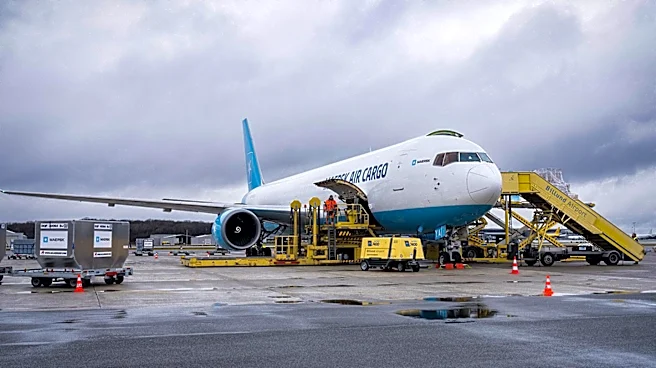
FedEx, a major American express logistics company, is significantly increasing its procurement of Sustainable Aviation Fuel (SAF) through new agreements. These deals are projected to secure over 20 million gallons of neat SAF across five key U.S. airports
by 2027. The airports involved are Newark Liberty International (EWR), Oakland International (OAK), Miami International (MIA), John F. Kennedy International (JFK), and Dallas Fort Worth International (DFW). The blend ratios for SAF at these locations are expected to range from 30% to 50%. This expansion is part of FedEx's broader strategy to integrate SAF into its U.S. air network and achieve its environmental goals. Since 2025, FedEx has already procured approximately 5 million gallons of neat SAF, leading to the deployment of 16.5 million gallons of blended SAF across the same five airports. The company aims to source 30% of its jet fuel from alternative blends by 2030.
Why It's Important?
This move by FedEx is a critical step in the decarbonization of the aviation industry, which is a significant contributor to global carbon emissions. By expanding SAF procurement, FedEx is not only reducing its own carbon footprint but also signaling strong market demand for sustainable fuels. This increased demand is essential for driving down the cost of SAF, which currently remains a costly alternative to conventional jet fuel. The initiative also highlights the role of state and federal incentives in enabling the wider adoption of SAF, demonstrating how policy can accelerate environmental sustainability efforts within the private sector. As Karen Blanks Ellis, Chief Sustainability Officer and Vice President of Environmental Affairs at FedEx, noted, growing the SAF market requires reliable, affordable, and sustainable supply, and expanded procurement helps boost both usage and demand for greater production and scale. This commitment from a major logistics player like FedEx can encourage other companies to follow suit, fostering a more sustainable future for air cargo and travel.
What's Next?
FedEx plans to continue exploring opportunities for further SAF expansion across its network, contingent on supply availability, infrastructure development, and economic viability. The company's goal of sourcing 30% of its jet fuel from alternative blends by 2030 will necessitate ongoing investment and partnerships within the SAF production and distribution sectors. This commitment is likely to spur further innovation and scaling of SAF production technologies. Additionally, the success of FedEx's initiative could influence policy discussions regarding incentives and regulations for sustainable aviation fuels, potentially leading to broader governmental support for the industry. Other logistics and airline companies will likely monitor FedEx's progress, and its achievements could serve as a benchmark for industry-wide sustainability targets. The continued growth in SAF procurement is expected to contribute to a more robust and competitive market for these alternative fuels.
Beyond the Headlines
The expansion of SAF procurement by FedEx has deeper implications beyond immediate emissions reductions. It underscores a growing corporate responsibility trend where major corporations are actively investing in sustainable solutions, even when they are more expensive. This commitment can influence consumer expectations, pushing for more environmentally conscious practices across various industries. Furthermore, the reliance on SAF highlights the complex interplay between technological innovation, economic incentives, and environmental policy. The development and scaling of SAF production can create new green jobs and foster economic growth in the renewable energy sector. This initiative also serves as a practical example of how large-scale logistical operations can adapt to meet ambitious sustainability goals, potentially inspiring similar transformations in other carbon-intensive sectors. The long-term shift towards SAF could redefine the operational standards for air freight, making sustainability a core component of competitive advantage.