


What's Happening?
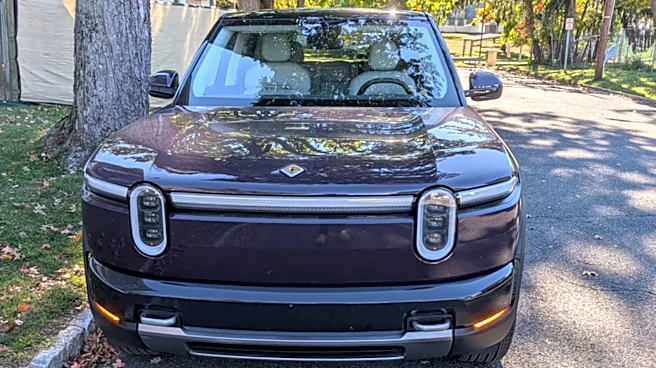
Rivian has replaced a customer's R2 Performance Launch Edition vehicle after its AC compressor repeatedly failed within two months and 6,000 miles of ownership. The original vehicle experienced its first AC failure in South Florida and a second failure during
a service appointment for a suspension squeak. Following these issues, Rivian corporate offered to swap the car, sending the faulty unit to Palo Alto for its engineering team to investigate the compressor failures. The customer received a replacement R2, which is also a Launch Green model but features a Coastal Cloud interior and 21-inch all-season wheels, a combination the customer originally desired but was unavailable at the time of the first order. The replacement vehicle, built in October, has a VIN almost 10,000 units later than the original and includes cushion-only seat ventilation, lacking the backrest fan present in the earlier model.
Why It's Important?
This incident highlights the critical importance of product reliability and customer service in the nascent electric vehicle market, particularly for newer manufacturers like Rivian. The prompt replacement of a vehicle due to a recurring mechanical issue demonstrates Rivian's commitment to addressing significant defects and maintaining customer satisfaction. Such actions can build brand trust and loyalty, which are crucial for a company establishing itself against more established automotive giants. However, the underlying issue of AC compressor failure, and the subsequent engineering investigation, points to potential quality control or design challenges that Rivian needs to resolve to ensure long-term product integrity. The change in seat ventilation in the replacement vehicle also indicates ongoing design adjustments, which can impact customer experience and perception of product consistency.
What's Next?
Rivian's engineering team will be thoroughly examining the original R2 vehicle in Palo Alto to determine the root cause of the AC compressor failures. The findings from this investigation will be crucial for implementing necessary design changes, manufacturing process improvements, or software updates to prevent similar issues in future R2 units. The customer is awaiting updates from Rivian regarding the engineering findings, which will likely be shared publicly or used to inform service bulletins. For Rivian, transparent communication about these findings and the steps taken to address them will be vital for reassuring current and prospective customers about the reliability of their vehicles. This situation also underscores the ongoing evolution of EV technology, where early adopters may encounter issues that require direct manufacturer intervention and continuous product refinement.
Beyond the Headlines
The experience of this Rivian customer, involving a vehicle replacement and an engineering deep-dive into a component failure, sheds light on the complexities of manufacturing and scaling new automotive technologies. Unlike traditional internal combustion engine vehicles with decades of refinement, EVs are still undergoing rapid development, meaning that early production models can sometimes reveal unforeseen issues. Rivian's decision to replace the vehicle and conduct a detailed engineering analysis, rather than just repairing it, suggests a proactive approach to quality assurance and a commitment to understanding and resolving fundamental design flaws. This level of engagement can be a double-edged sword: while it builds trust, it also exposes the challenges of bringing innovative products to market. The incident also subtly touches upon the rapid iteration cycles in EV manufacturing, where even minor design changes, like the removal of a backrest fan, can occur between production batches, impacting user experience.