






What's Happening?
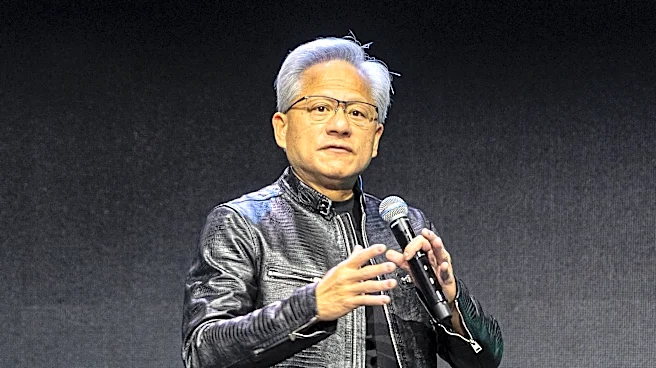
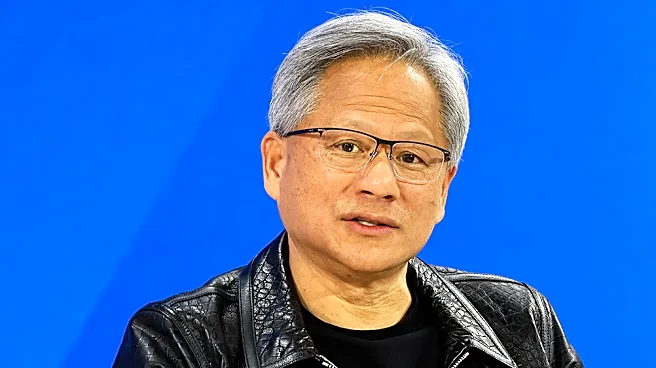
On November 12, Nvidia's board announced the immediate resignation of CEO Jensen Huang. This decision followed reports alleging Huang's romantic involvement with two individuals: a woman reportedly connected to China's Ministry of State Security and an employee
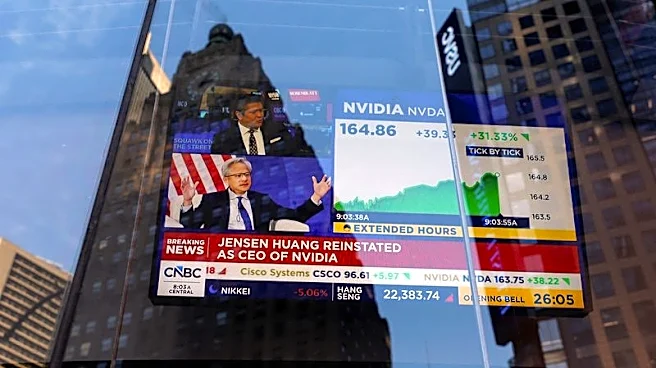
of Nvidia. However, just over a week later, on November 23, the board reinstated Huang as CEO. The initial resignation and subsequent reinstatement have drawn significant attention, with the personal aspects of the situation dominating public discussion. The company's board made the initial announcement of his departure and then reversed course, bringing Huang back into his leadership role.
Why It's Important?
The rapid resignation and reinstatement of a high-profile CEO like Jensen Huang at a major technology company like Nvidia carries significant implications for corporate governance and investor confidence. Such events can create instability within the company's leadership and raise questions about the board's decision-making processes. For Nvidia, a leader in the semiconductor industry, any perceived instability at the top could impact its market position, stock performance, and relationships with partners and customers. The allegations of romantic involvement, particularly with an individual tied to a foreign government entity, also highlight potential national security and corporate espionage concerns, which could attract scrutiny from regulatory bodies and impact the company's international operations and reputation. The incident underscores the increasing pressure on corporate leaders to maintain impeccable personal conduct, especially when their actions could have broader geopolitical or economic ramifications.
What's Next?
Following Jensen Huang's reinstatement, Nvidia will likely focus on stabilizing its leadership and reassuring stakeholders about its operational continuity and strategic direction. The company may need to address any internal or external concerns that arose from the allegations and the brief period of leadership uncertainty. It is probable that the board will face questions regarding the thoroughness of its initial investigation into the allegations and the rationale behind both the resignation and the subsequent reinstatement. Depending on the nature of the initial reports and any ongoing investigations, there could be further scrutiny from government agencies, particularly concerning the alleged ties to China's Ministry of State Security. Nvidia's communication strategy in the coming weeks will be crucial in managing public perception and maintaining investor confidence.
Beyond the Headlines
The Nvidia incident brings to light several deeper implications beyond the immediate corporate drama. It underscores the complex interplay between personal conduct, corporate leadership, and national security, particularly for companies operating in sensitive technological sectors with international reach. The allegations of involvement with an individual tied to a foreign intelligence agency raise critical questions about corporate vulnerability to espionage and the due diligence required of executives in their personal lives. Furthermore, the swift reversal of the board's decision to accept Huang's resignation could spark broader discussions about the power dynamics between founders/CEOs and corporate boards, especially in high-growth tech companies. This event may also prompt other corporations to review their internal policies regarding executive conduct, conflict of interest, and crisis management protocols, particularly in an era where personal lives of public figures are increasingly scrutinized and can have significant corporate repercussions.