







What's Happening?
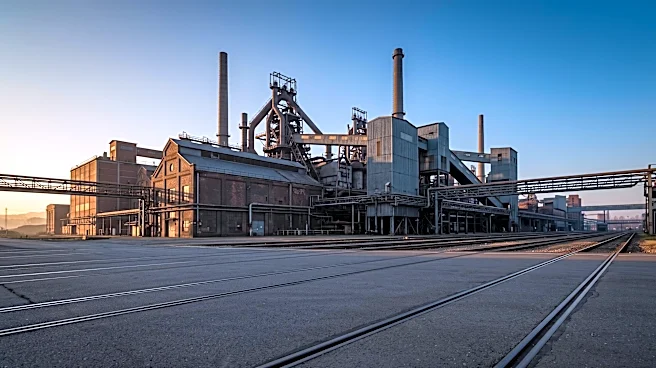
Cleveland-Cliffs has significantly altered its $1 billion modernization project for Middletown Works in Ohio, moving away from its initial plan to replace the existing blast furnace with a hydrogen-ready direct reduced iron (DRI) plant and electric melting
furnaces. The revised strategy, supported by a $500 million U.S. Department of Energy award, now focuses on rebuilding and upgrading the current blast furnace. This updated plan includes investments in advanced material-handling infrastructure, the implementation of artificial intelligence-based process controls, and the construction of a cogeneration facility. This facility will capture blast furnace gas to produce electricity and steam for the plant, aiming to improve energy efficiency, lower operating costs, and reduce reliance on external electricity suppliers. The blast furnace rebuild is projected to be completed in the first quarter of 2030, with construction spanning approximately four years. The Department of Energy indicates this project will safeguard about 2,300 jobs at Middletown Works and create around 1,500 construction jobs.
Why It's Important?
This change in direction by Cleveland-Cliffs highlights a critical challenge in the industrial decarbonization effort: the commercial viability of green technologies. The original proposal aimed to significantly reduce emissions and position the facility for future hydrogen use, but Cleveland-Cliffs determined that customers were unwilling to pay a sufficient 'green premium' for steel produced through a lower-carbon process. This decision underscores the economic pressures faced by manufacturers when implementing costly decarbonization projects, especially when downstream customers, such as those in the automotive industry, prioritize cost targets despite public commitments to reducing supply chain emissions. The revised plan, while still a substantial modernization, represents a different balance between investment risk, operational certainty, and emissions reduction, continuing to rely on a blast furnace that uses coal-derived coke. This situation reveals a gap between technical progress in industrial decarbonization and the market's willingness to absorb the associated higher costs, impacting the broader adoption of advanced, lower-carbon steelmaking processes in the U.S.
What's Next?
The modernization project at Middletown Works will proceed with the rebuild and upgrade of the existing blast furnace, with completion anticipated in the first quarter of 2030. Over the next four years, construction will focus on installing new process controls, material-handling equipment, and the cogeneration facility. This approach will allow Cleveland-Cliffs to enhance productivity and efficiency while leveraging established operational processes and supply chains associated with blast furnaces. The company will continue to monitor the market for hydrogen and other low-carbon technologies, but the immediate focus will be on optimizing the current infrastructure. The decision also sets a precedent for other industrial decarbonization projects, suggesting that future initiatives may need to demonstrate stronger commercial arguments or rely on greater customer willingness to pay for green products to justify significant shifts in production technology. The broader U.S. steel industry will likely observe the outcomes of this revised strategy to inform their own investment decisions in emissions reduction.
Beyond the Headlines
The shift in Cleveland-Cliffs' modernization plan reveals a deeper tension between environmental goals and economic realities in the U.S. industrial sector. While the company has demonstrated the technical feasibility of hydrogen in steelmaking, the lack of a viable business case due to insufficient customer demand for a 'green premium' illustrates a significant hurdle for widespread adoption of such technologies. This situation raises questions about the effectiveness of current incentives for industrial decarbonization and whether policy mechanisms are adequately bridging the cost gap for cleaner production methods. It also highlights the complex interplay between corporate sustainability commitments, consumer demand, and the competitive pressures of global markets. The Middletown decision suggests that for hydrogen steelmaking to move from pilot projects to mainstream production, there will need to be either a substantial reduction in the cost of these technologies, a significant increase in customer willingness to pay for lower-carbon products, or more robust governmental support to absorb the initial investment and operational costs. This case could influence future federal funding allocations and policy discussions regarding industrial emissions reductions.