




What's Happening?
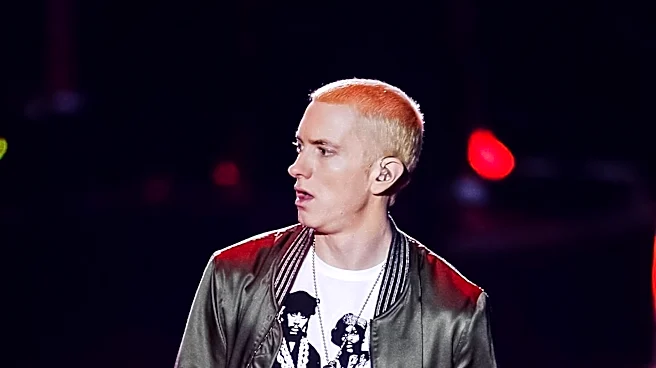
Eminem's iconic term 'stan,' derived from his 2000 song of the same name, has evolved to describe an extremely enthusiastic and often obsessive fan. Originally used within the context of music, particularly to characterize his dedicated followers, the term has now
permeated popular culture. It is widely used to refer to devoted fans of various celebrities and entertainment figures across different mediums. The term's widespread adoption and recognition are evidenced by its inclusion in the Oxford English Dictionary, signifying its established place in contemporary language. The song 'Stan' itself delves into the darker side of fan obsession, portraying a fan whose devotion turns into a dangerous fixation, ultimately leading to tragic consequences. This narrative provided the foundation for the term's meaning, highlighting the intensity and potential pitfalls of extreme fandom.
Why It's Important?
The evolution of the term 'stan' is important because it reflects a significant shift in how fan culture is perceived and discussed in the U.S. and globally. It provides a concise and widely understood descriptor for a level of fan engagement that goes beyond casual admiration, often involving deep emotional investment and active participation in a celebrity's career or personal life. This phenomenon has implications for the entertainment industry, as artists and public figures increasingly navigate the complexities of highly dedicated fan bases, which can be both a source of immense support and, at times, intense scrutiny or pressure. The term also highlights the growing influence of online communities in shaping fan interactions and the public discourse around celebrity culture, as 'stans' often organize and express their devotion through digital platforms. Understanding this dynamic is crucial for public relations, marketing, and even mental health discussions surrounding celebrity and fan relationships.
What's Next?
The continued use and evolution of 'stan' suggest that the concept of obsessive fandom will remain a prominent aspect of popular culture. We can expect to see further discussions and analyses of 'stan' culture, particularly concerning its impact on celebrity mental health, fan ethics, and the boundaries of public engagement. The entertainment industry may continue to adapt its strategies to engage with and manage these highly dedicated fan bases, potentially leading to new forms of fan interaction, exclusive content, or community management. Additionally, as the term becomes more ingrained, its application may broaden further, encompassing devotion to brands, political figures, or even abstract concepts, reflecting a broader cultural trend of intense identification and loyalty. The ongoing dialogue around 'stan' culture will likely explore both the positive aspects of community and support, as well as the potential for toxicity and unhealthy obsession.
Beyond the Headlines
Beyond its immediate use as a descriptor, the term 'stan' touches upon deeper psychological and sociological implications of modern celebrity culture. It reflects a human need for connection and belonging, which can be fulfilled through identification with public figures. The intensity of 'stan' behavior can be seen as a manifestation of parasocial relationships, where individuals develop one-sided emotional bonds with media personalities. This phenomenon is amplified by social media, which blurs the lines between public and private life, allowing fans unprecedented access and perceived intimacy with their idols. The ethical dimension arises when this devotion crosses into harassment, doxing, or an inability to distinguish between the celebrity's persona and their actual self. Culturally, 'stan' culture also highlights the power dynamics inherent in celebrity-fan relationships and the ways in which fans can collectively influence narratives, careers, and even social movements, sometimes for better, sometimes for worse.