


What's Happening?
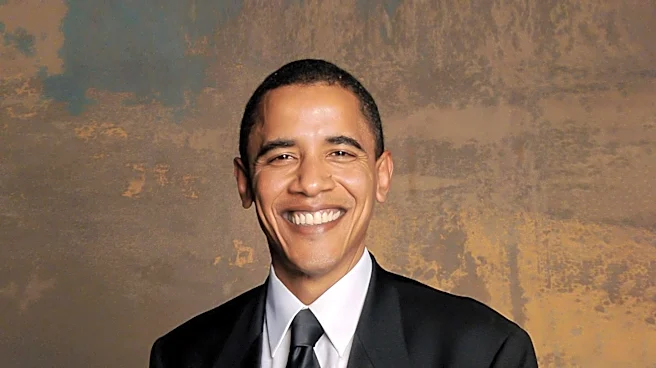
The final episode of the sketch comedy series 'Life, Larry, and the Pursuit of Unhappiness' featured a notable appearance by former President Barack Obama. In the episode, Obama, who is also an executive producer of the show, plays himself in a sketch that
humorously revisits the controversy surrounding his decision to wear a tan suit during a 2014 press conference. The sketch involves Larry David in the Oval Office with Obama, discussing wardrobe choices for an upcoming press conference. The comedic twist occurs when Larry accidentally spills orange juice on Obama's navy suit, leading to the suggestion that Obama wear the tan suit instead. This playful nod to a past media frenzy highlights the show's blend of humor and political satire.
Why It's Important?
This episode underscores the enduring cultural impact of seemingly trivial political moments, such as Obama's tan suit incident, which became a significant media talking point in 2014. By revisiting this moment through comedy, the show not only entertains but also prompts reflection on how media narratives can amplify minor events into major controversies. The involvement of Obama in the sketch adds a layer of authenticity and self-awareness, as he directly engages with the public's perception of his presidency. This approach can influence how audiences perceive political figures and the media's role in shaping public discourse.
What's Next?
The series 'Life, Larry, and the Pursuit of Unhappiness' is now available for streaming on HBO Max, potentially reaching a wide audience and sparking discussions about the intersection of politics and entertainment. The show's conclusion with Obama's participation may encourage other political figures to engage in similar media projects, blending humor with political commentary. Additionally, the episode may inspire further analysis of how political figures use media appearances to shape their public image post-presidency.
Beyond the Headlines
The sketch's playful take on the tan suit incident highlights broader themes of how political figures navigate public scrutiny and media narratives. It raises questions about the balance between personal image management and public perception, especially in the digital age where minor incidents can quickly escalate into viral moments. The episode also reflects on the role of satire in political discourse, offering a platform for political figures to engage with their past in a lighthearted manner, potentially reshaping their legacy.